
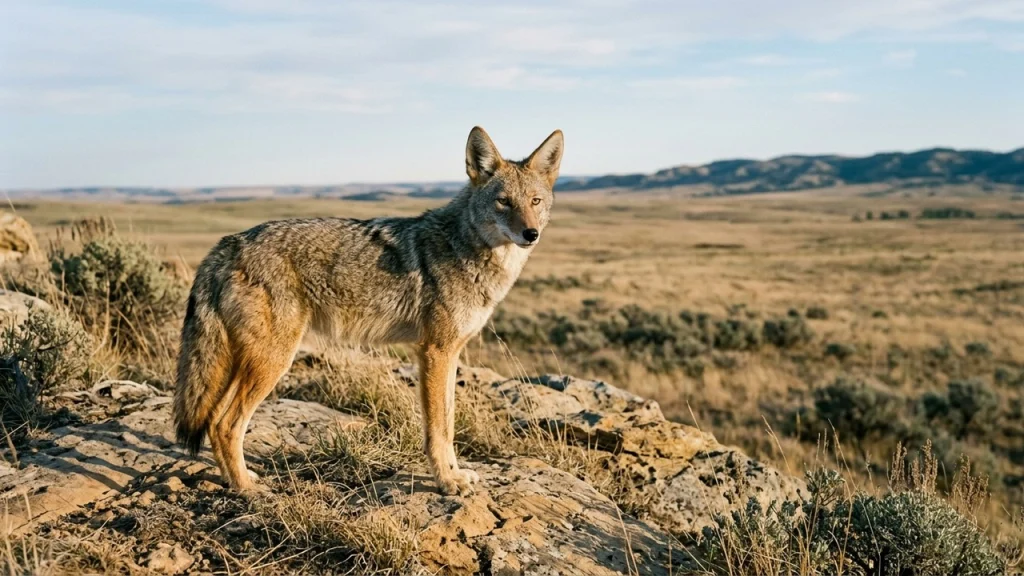
The University of Florida IFAS Extension says coyotes live 5 to 6 years in the wild. The National Park Service’s Yellowstone page lists an average life span of 6 years, while its page for Ninety Six National Historic Site says most coyotes in the wild will not survive beyond 3 years of age.
In captivity, the National Park Service’s page for Ninety Six National Historic Site lists a lifespan of 13 to 15 years. Animal Diversity Web says 18 years is the maximum known in captivity, and the University of Florida IFAS Extension reports an oldest captive coyote of 18 to 19 years.
Oldest coyotes in the wild
Animal Diversity Web says the maximum known age in the wild is ten years. The University of Florida IFAS Extension reports about 12 years for the oldest wild coyote, and the National Park Service’s Yellowstone page lists up to 13 years in the park. The three figures differ, and each describes the oldest animals rather than a typical lifespan.
Disease, vehicles and early survival
A 2024 study led by New Mexico State University, reported on the National Park Service’s Valles Caldera page, found that parvovirus had infected 100% of the coyotes at Valles Caldera National Preserve at some point, usually when they were young. The same page says 84% had been infected with plague bacteria, and that distemper virus was found in 59% of the coyotes, a share that increased with age.
In the mortality analysis of a paper on coyote dispersal, 28 of 48 coyotes died after a vehicle hit them. The paper describes survival to age 2, which it counts as adulthood, as quite high: only 11 of 48 coyotes died before reaching it.
Mating, dens and litters
The National Park Service’s Ninety Six page gives the breeding season as late February and early March. Animal Diversity Web says gestation lasts 60 to 63 days. Litters run from 1 to 19 pups, and the average is 6.
The University of Florida IFAS Extension says both parents care for the young, and that dens are typically located in burrows, hollow logs or dense vegetation.
Pups and young coyotes
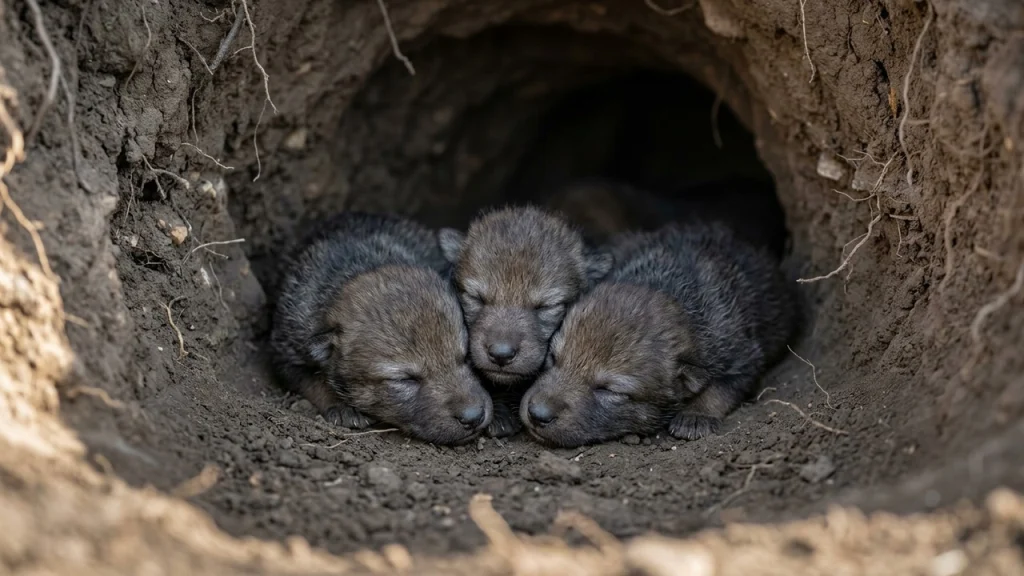
Animal Diversity Web says pups are born blind, limp-eared and pug-nosed. After 10 days their eyes open, they weigh 600 grams and their ears begin to stand up. They begin coming out of the den twenty-one to 28 days after birth, and by 35 days they are fully weaned.
Both parents feed the pups regurgitated food. Adults keep young pups in or near the den, and Animal Diversity Web gives the reason as protection from predators and competitors such as wolves and mountain lions.
Male pups leave the den between months 6 and 9. Females usually remain with their parents and form the basis of the pack. Coyotes reach sexual maturity by 12 months.
Diet and hunting
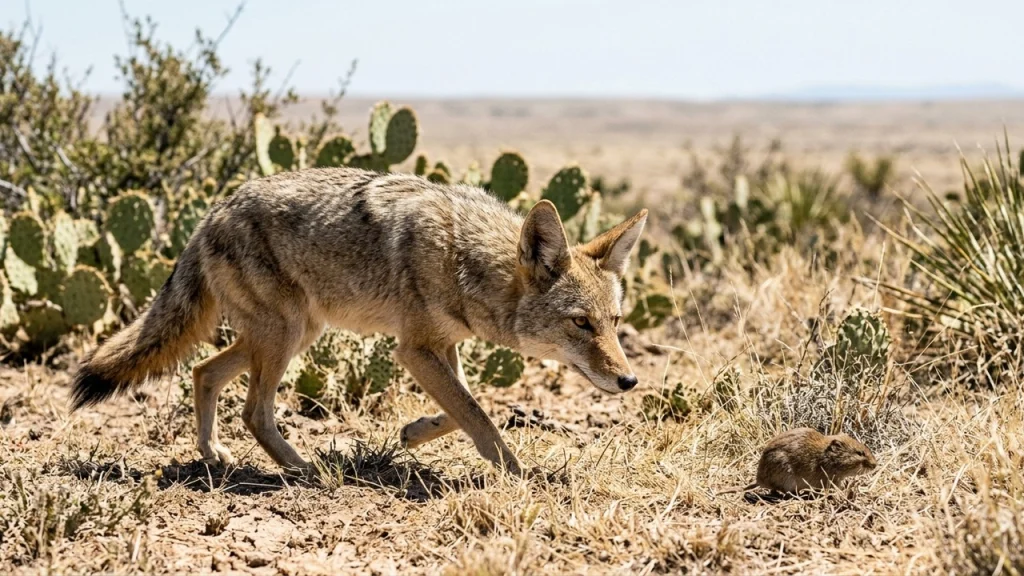
The National Park Service says Yellowstone coyotes live mainly on voles, mice, rabbits, other small animals and carrion. Among elk, they take only the very young calves in spring.
The National Park Service’s Ninety Six page calls coyotes omnivorous and says they will eat about anything, from cactus fruit and mesquite beans to flowers, insects, rodents, lizards, rabbits, birds and snakes. Animal Diversity Web says hunting takes place around the den, and coyotes hunt alone, in pairs or with their family, depending on the prey available.
Size, speed and social life
The National Park Service’s Yellowstone page lists coyotes at 25 to 35 pounds and 16 to 20 inches high at the shoulder. Animal Diversity Web says they can reach speeds of up to 65 km/hr and can cover up to 4 m in a jump.
The University of Florida IFAS Extension gives an average home range of 10 to 14 square miles, with core areas of 1 to 2 square miles. It describes coyotes as social, vocalizing with yips, barks and howls. In Yellowstone, the Park Service says coyotes formed packs or family groups with up to seven animals.
Sources
- Animal Diversity Web: Canis latrans (coyote) | INFORMATION | Animal Diversity Web
- University of Florida IFAS Extension: WEC398/UW443: Wildlife of Florida Factsheet: Coyote
- U.S. National Park Service: Coyote – Yellowstone National Park (U.S. National Park Service)
- U.S. National Park Service: Coyote – Valles Caldera National Preserve (U.S. National Park Service)
- U.S. National Park Service: Mammals – Ninety Six National Historic Site (U.S. National Park Service)
- PubMed Central: Early life experience influences dispersal in coyotes (Canis latrans) – PMC