
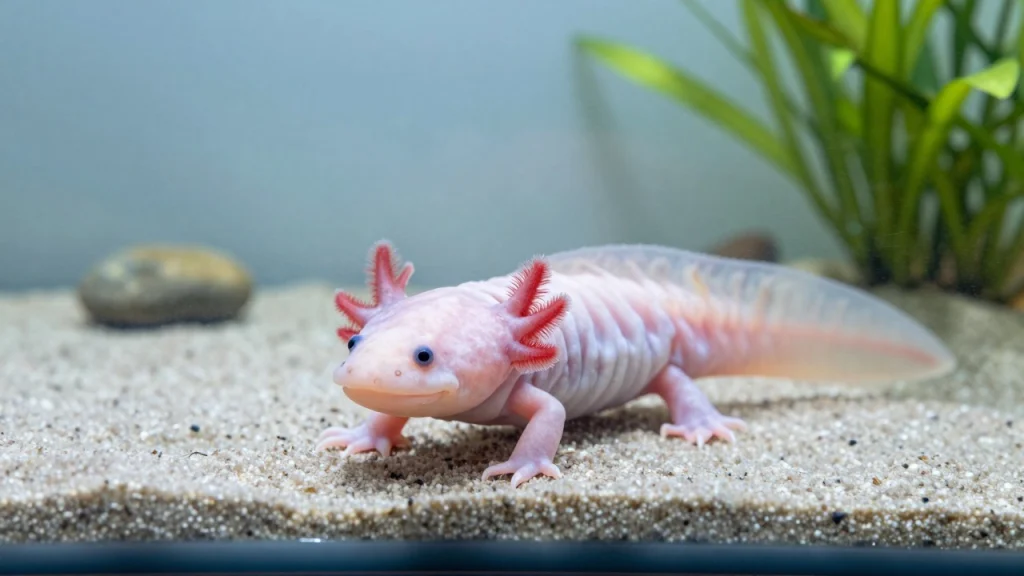
None of the sources reviewed here gives one firm number for how many days a healthy axolotl can fast. What the evidence does show is that salamanders as a group tolerate starvation remarkably well, and that captive axolotls are normally fed on a regular schedule, so a long fast is a sign of trouble, not a routine test.
This article separates what is documented for axolotls from what is documented for their relatives, so you can see where the evidence is solid and where it stops.
What the evidence says about fasting in axolotls
Researchers report that salamanders and other cold-blooded amphibians can go without eating for surprisingly long stretches. That finding comes from work on several salamander species, not from a timed starvation test on axolotls, so it shows a family trait and not an axolotl record.
One research protocol on axolotls gives a practical clue. The team fasted the animals for five days before measuring oxygen use and taking blood samples, which kept the effects of digestion out of the readings.
The same protocol also set limits for stopping an experiment. Animals were removed if they lost more than 20% of their body mass, turned down food for over a week, or stopped responding to a tail pinch. A week of refusing food counted as a warning sign in that study, even though a fast can be far longer in other salamanders.
How other salamanders survive months without eating
The best-documented starvation results come from relatives of the axolotl. In one experiment, Iberian ribbed newts (Pleurodeles waltl) went 19 months with no food at all. They changed a great deal physically, yet stayed active and alert.
The cost of that fast was visible. By the end, the starved newts weighed only 40% as much as newts that were fed normally, and their body length had shrunk by 11%.
The newts also slowed their bodies down. Their oxygen consumption dropped well below that of fed animals, which points to a lowered metabolic rate. Burning less energy per day is what stretches a limited store of body reserves over many months.
The cave-dwelling olm (Proteus anguinus) goes further still. It can survive food deprivation for up to 96 months without signs of illness or hibernation. These figures describe other species, so they cannot be applied to a pet axolotl.
Why temperature changes how fast an axolotl burns energy
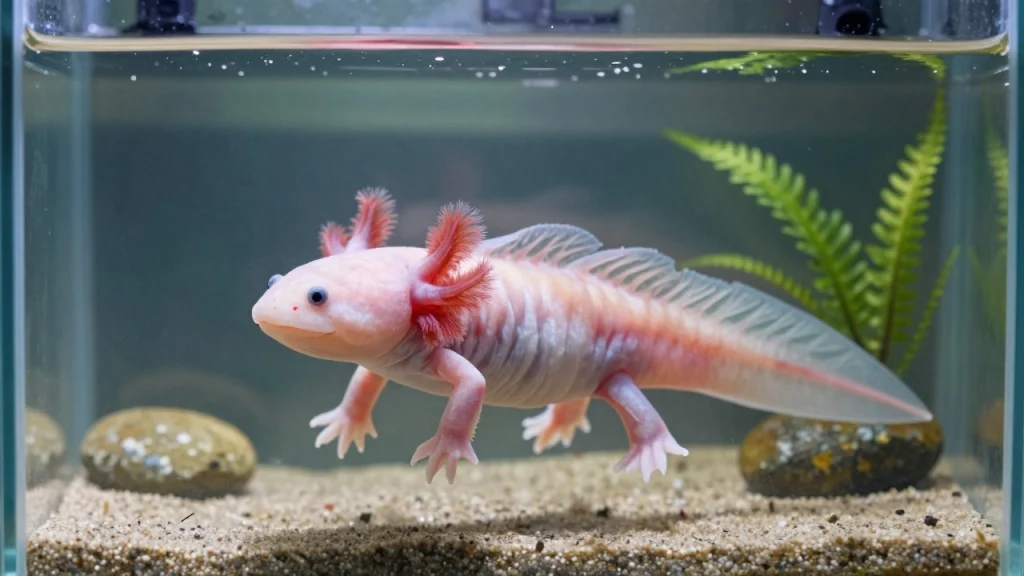
In ectotherms metabolic turnover, growth and aging all speed up as temperature rises, up to an optimal point. A warmer axolotl therefore uses its reserves faster, which shortens the time it can comfortably go without a meal.
Axolotls prefer cool water. A long-running university colony keeps its animals at 15-18°C (60-65°F) and advises against ever letting the water climb past about 22°C (72°F). Cool water keeps energy demand low, while a warm tank raises it.
How often axolotls normally eat
Feeding needs depend on age. In the same colony, larvae get newly hatched brine shrimp every day. Larvae that go unfed early on can swallow air and end up with air bubbles in the stomach.
Young larvae are also very vulnerable to disease and hard to treat, so the colony’s strategy is to feed them generously and keep the water clean. For young animals, a missed meal matters much more than it does for an adult.
Once axolotls reach about one year old, the colony cuts feedings to three or four times per week, and each meal is capped at five pellets. Well-fed axolotls kept in clean, suitably cool water are described as hardy animals that seldom get sick.
What axolotls eat and how they hunt in the wild
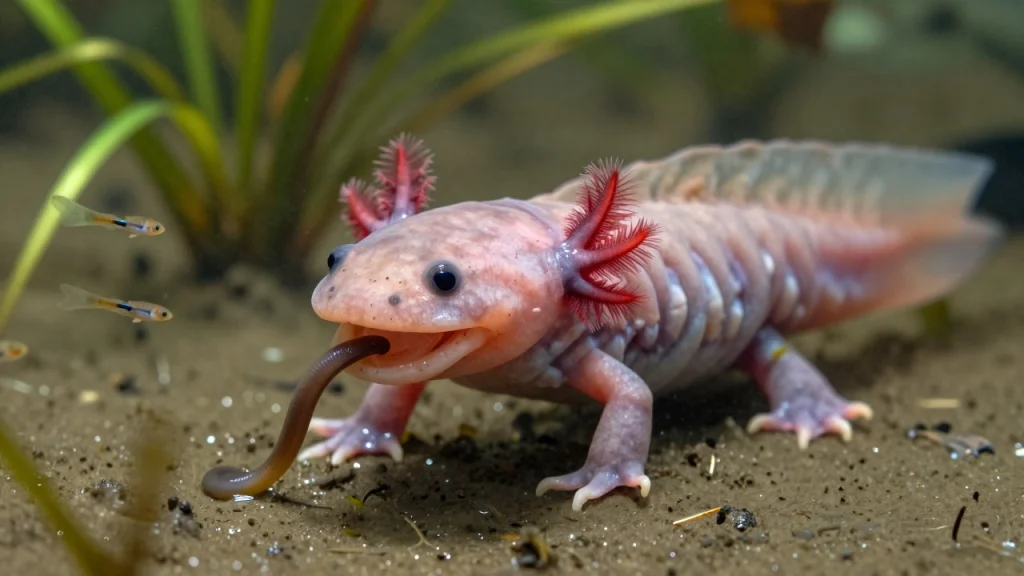
In their natural habitat, axolotls are usually the top predator. They take prey such as molluscs, fishes and arthropods, and even other axolotls.
Their hunting method is suction. Axolotls pull small fish, insects, worms and tadpoles into the mouth, and they burrow into vegetation and mud by day.
Conservation status of the wild axolotl
Wild axolotls are Critically Endangered, according to the San Diego Zoo Wildlife Alliance. It names pollution, habitat degradation and predation as the combined pressures behind that status.
Practical takeaways for owners
- Do not treat a long fast as normal. Research colonies feed young larvae daily and adults several times a week.
- Keep the water cool. Warmth raises metabolic demand.
- Watch for a week of refused food. One study treated that as grounds to stop an experiment.
- Act on weight loss. Starved salamanders visibly shrink over time.
A missed meal or two is a different matter from a long fast, but the safest approach is to stick to the regular schedule and look for the cause if an axolotl keeps turning food down.
Sources
- PubMed Central (peer-reviewed paper): Altered metabolic state impedes limb regeneration in salamanders
- PubMed Central (peer-reviewed paper): Temperature-Dependent Modulation of Cardiac Metabolism, Post-Injury Survival and Regenerative Rate in Axolotls
- University of Kentucky Ambystoma Genetic Stock Center: Guide to Axolotl Husbandry
- Animal Diversity Web: Ambystoma mexicanum (Salamandra ajolote)
- San Diego Zoo Wildlife Alliance: Axolotl