
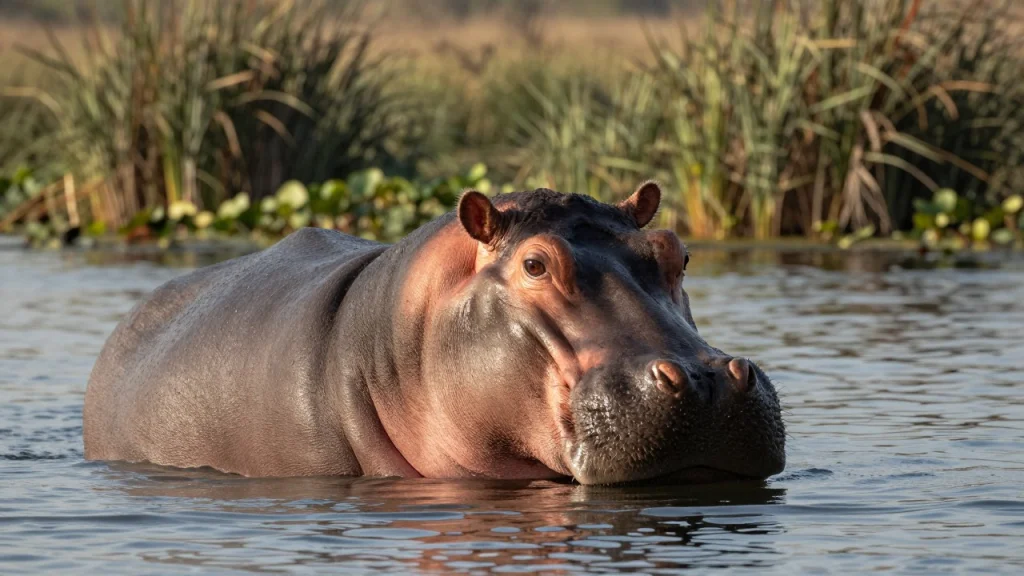
The figure most often quoted for a hippopotamus bite is about 1,800 PSI, but it is an approximate, unverified number. It traces back to a bite test on a female hippo filmed for a National Geographic TV program, but no published measurement confirms it, and PSI measures pressure, while bite tests record force. A hippopotamus’s bite is nearly three times stronger than a lion’s.
Understanding the bite force of a hippopotamus in PSI requires looking at both physical anatomy and natural behaviors. Despite being semi-aquatic herbivores, hippos possess massive jaws, large teeth, and heavy muscle structures designed for territory defense and protection against rival animals.
How Strong Is a Hippo’s Bite Force in PSI?
Pressure, rather than force, is measured in pounds per square inch (PSI), which indicates force per unit area.
To put this comparison into context, here is how other animals’ bite force measures up:
- Spotted Hyena: ~1,000 PSI
- Lion: ~1,000 PSI
- Human: ~150 to 200 PSI
While carnivorous predators rely on their bites to hunt and kill prey, hippos use their immense force primarily for defense and territorial control.
Anatomy Behind the Hippo’s Jaw Strength
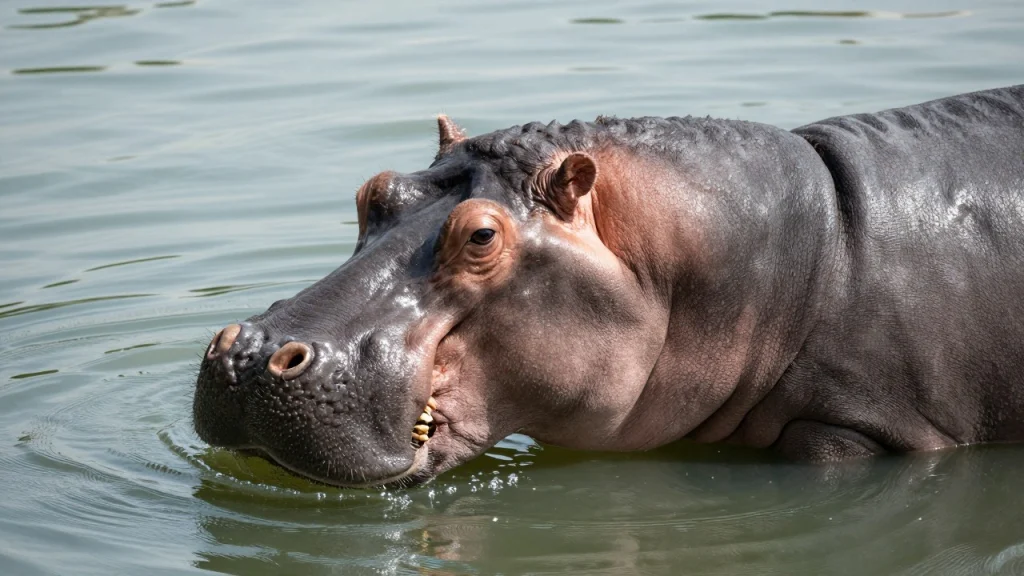
The hippo’s powerful bite comes from its unique cranial and muscular anatomy. Several key evolutionary traits work together to generate extreme force:
Massive Muscle Attachment Points
Hippos have enlarged masseter and temporalis muscles, the primary muscle groups responsible for closing the jaw. Their broad skulls provide ample surface area for these powerful muscle fibers to attach, allowing maximum leverage when snapping the mouth shut.
Extreme Gape Angle
A hippopotamus can open its mouth to an angle of 150 to 180 degrees. This wide gape allows the animal to display its massive lower teeth and accommodate large objects or rivals between its jaws before clamping down with full force.
Self-Sharpening Canines and Incisors
Although hippos use their molars to grind grass, their front teeth are built for combat. The lower canines can grow up to 20 inches (50 cm) long. As the upper and lower teeth rub together during daily activity, they naturally sharpen each other, creating formidable natural weapons.
Why Do Herbivorous Hippos Need Such a Strong Bite?
Because hippos spend their nights grazing on land, they do not require strong jaws to catch or break down meat. Instead, their bite force evolved to serve critical survival functions in their aquatic habitats:
- Territorial Disputes: Male hippos (bulls) aggressively defend their stretches of river or lake. Battles between rivals involve head-butting, pushing, and devastating bites.
- Predator Deterrence: Nile crocodiles share the same waterways as hippos. A hippo’s powerful bite ensures that even large adult crocodiles rarely target adult hippos or their calves.
- Protecting the Herd: Female hippos (cows) fiercely defend their young from predators like lions and hyenas when moving between water and grazing grounds.
Measuring Animal Bite Force
Measuring the bite force of a live hippopotamus poses significant challenges due to the animal’s size and unpredictable temperament. Specialized transducers placed inside protective padding are used to record pressure readings during veterinary procedures or supervised research setups.
A hippopotamus is a plant-eater whose deadly strength makes it one of Africa’s most dangerous animals.
Sources
- University of Central Florida: 14.2 Measuring Pressure: University Physics Volume 1
- Animal Diversity Web, University of Michigan: Hippopotamus amphibius (hippopotamus) | Animal Diversity Web
- San Diego Zoo Wildlife Alliance: Hippo | San Diego Zoo Animals & Plants
- San Diego Zoo Wildlife Alliance: Behavior & Ecology – Hippopotamus (Hippopotamus amphibius) & Pygmy Hippopotamus (Choerpsis liberiensis) Fact Sheet
- National Geographic: Hippopotamus, facts and photos | National Geographic