
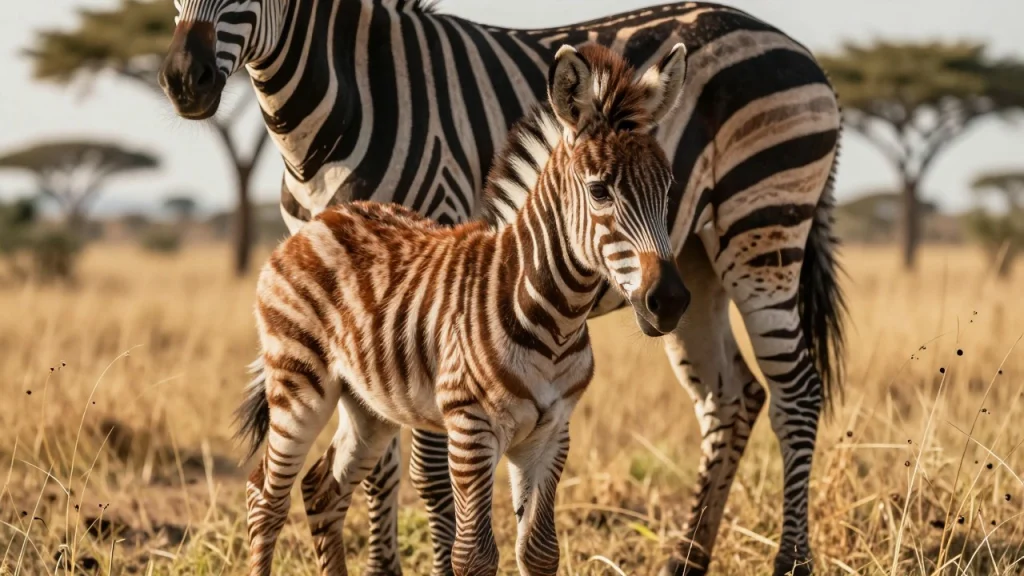
When a newborn zebra enters the world, one of its most striking physical features often surprises observers: its stripes are not black and white. Newborn foals usually have brown and white stripes; Grevy’s zebra foals have reddish-brown or russet stripes that gradually darken to black as they age.
This distinct coloration is entirely natural and serves essential functions for a young wild mammal surviving in open grasslands and savannas. Over time, these brown stripes gradually darken until the young zebra adopts the characteristic jet-black and bright-white pattern seen in adults.
Why Zebra Foals Are Born with Brown Stripes
The primary reason zebra foals are born with brown stripes involves camouflage and predator protection. In the wild, newborns are vulnerable to large predators such as lions, hyenas, and leopards. The softer brown hues break up the foal’s outline against dry grasses, tall vegetation, and sunlight, making it much harder for predators to spot them from a distance.
Beyond camouflage, the brown stripes play a critical role in maternal bonding:
- Visual identification: The subtle brown patterns help mothers recognize their newborns immediately after birth.
- Herd blending: When standing alongside adult herd members, the lighter brownish tones disrupt a predator’s visual acuity, making it difficult to target the foal specifically.
How and When the Stripes Change Color
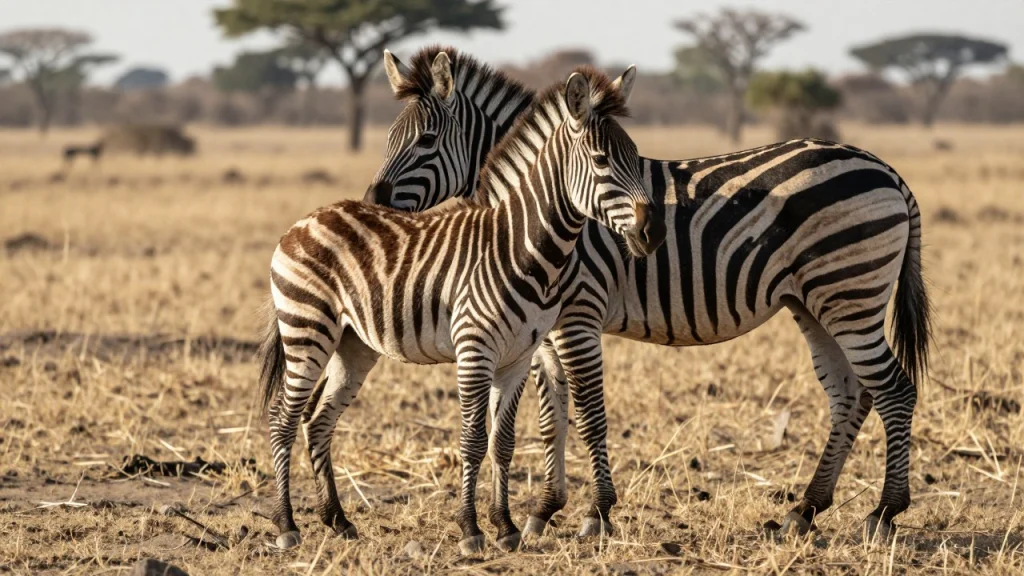
As zebra foals grow, their fur undergoes gradual physical transformations. The brownish coloration is temporary, produced by lower initial levels of melanin, the natural pigment responsible for dark hair and skin color in mammals.
As the young zebra matures, melanin synthesis increases within the hair follicles. The initial soft brown hair sheds and is replaced by coarser, heavily pigmented black hairs.
The timeline for this transition typically follows a general sequence:
- At first: Zebra foals have soft, fuzzy fur, and their stripes are usually brown and white.
- Gradual darkening: The brownish coloration gradually darkens toward black as the zebra ages.
Coat Differences Across Zebra Species
While brown stripes are standard across most newborn zebras, subtle variations exist depending on the specific zebra species:
- Plains Zebra: Newborn foals tend to have brownish and buff stripes instead of black and white. Some plains-zebra subspecies have brownish “shadow” stripes between the black stripes on their coat.
- Grevy’s Zebra: Foals are born with reddish-brown or russet stripes instead of the black of adults, and these gradually darken to black as the zebra ages.
- Mountain Zebra: Adults have a white ground color with black to deep brown stripes.
Understanding these early physical development traits highlights how wild ungulates adapt from birth to thrive within complex savanna ecosystems. Foals are especially vulnerable to predation, and a zebra’s stripes serve as protection from predators.
Sources
- San Diego Zoo Wildlife Alliance: Zebra | San Diego Zoo Animals & Plants
- Animal Diversity Web: Equus burchellii (Burchell’s zebra) | INFORMATION | Animal Diversity Web
- Animal Diversity Web: Equus grevyi (Grevy’s zebra) | INFORMATION | Animal Diversity Web
- Animal Diversity Web: Equus zebra (mountain zebra) | INFORMATION | Animal Diversity Web
- National Geographic: Why Do Zebras Have Stripes? New Study Makes Temperature Connection