
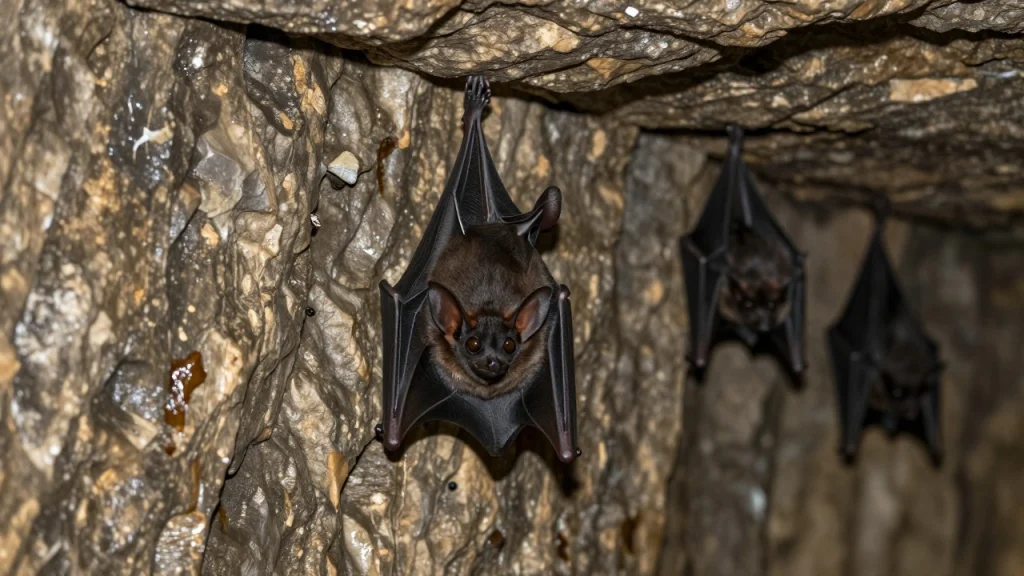
Yes, a few of them do, and they are a very small minority. Bats belong to the order Chiroptera, and of the nearly 1,000 bat species, only three live on blood, with cattle the usual source. Nearly everything else in the order feeds on fruit, pollen, nectar, small land animals or fish, which is where the popular image of bats as blind bloodsuckers goes off the rails.
The species usually meant is the common vampire bat, Desmodus rotundus, a leaf-nosed bat whose range runs from Mexico down to Argentina and Chile. It eats nothing but the blood of other vertebrates, which makes it an obligate parasite: blood is the whole diet, not a top-up. Livestock come first simply because they are abundant, and wild mammals are taken as well, with people an occasional target.
Three species, three different appetites
There are three vampire bat species, and they are not interchangeable. Desmodus rotundus is the only one that feeds mainly on mammals, especially large ones such as cattle, while Diaemus youngi and Diphylla ecaudata live mainly on birds. A poultry keeper and a cattle keeper in the same region can therefore be looking at two entirely different animals.
A bat that walks to its dinner
Nothing about the attack resembles the swoop of folklore, because vampire bats travel on the ground. Desmodus rotundus is unusual among bats, able to move quadrupedally by walking, running and hopping along the ground, its weight borne by powerful hind legs and altered thumbs. For a hunter whose target outweighs it many times over, leaving quickly matters more than winning a fight.
With a feeding site chosen, the bat opens the skin with a cut 3 mm across and laps up the blood that wells out. The wound is described as barely painful, and a sleeping animal seldom stirs, so a rancher can find a bat at work on a leg at dawn without ever knowing it was there. The San Diego Zoo is blunter still: the bats do not suck, they lick.
Keeping the wound open
A meal that stalls is a meal wasted, so the saliva does the work. Researchers have isolated a substance called draculin from vampire bat saliva, a glycoprotein that stops the wound from clotting so the bat can take a full meal. Saliva like this has been investigated for human medicine, including in people whose blood clots could cause a stroke.
Finding a vein in the dark
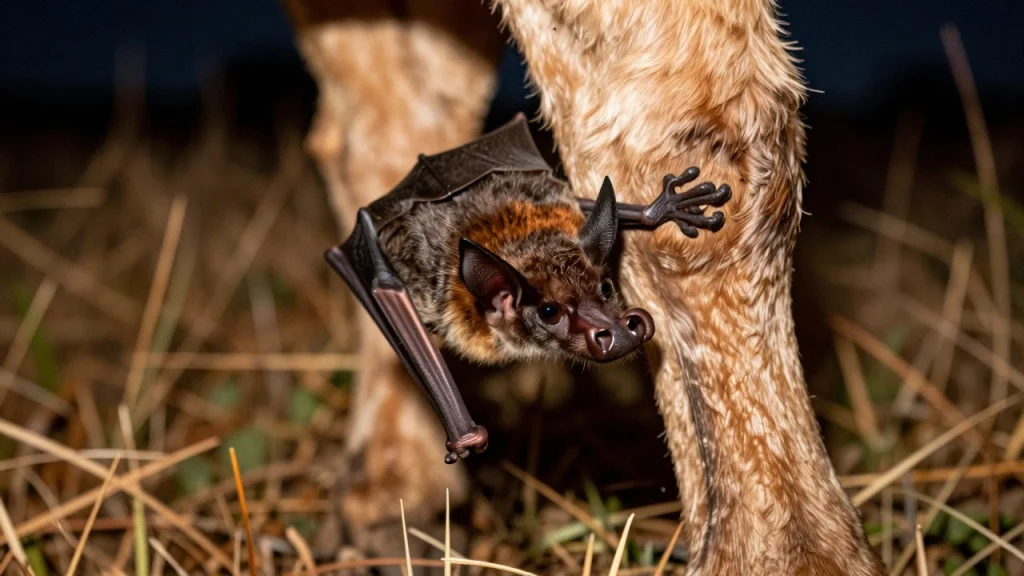
A sleeping animal offers few visual cues, so vampire bats hunt by heat. Pit organs on the face pick up infrared radiation, which lets them zero in on warm spots where vessels run close to the surface. The mechanism has been traced to a heat-sensitive channel called TRPV1, which these bats retune by lowering its activation threshold to about 30 °C, so plain body warmth sets it off.
A difficult diet
Blood is awkward food. A genome study of the vampire bat describes it as roughly 78% liquid, with a dry matter phase of about 93% protein and only about 1% carbohydrate, and it supplies very low levels of vitamins. A diet that heavy in protein and light on everything else puts a premium on waste disposal, and the same research points to kidney adaptations built around a very high filtration rate and effective urea excretion.
Roosts and colonies
Vampire bats gather in caves with deep fissures that are only moderately lit, and in tree hollows, and they also take over abandoned buildings, old wells and mine shafts. A colony usually numbers 20 to 100 individuals, and far larger gatherings of 5,000 have been reported. A colony that has fed well leaves a strong smell of ammonia behind, since digested blood ends up in the crevices and floors.
Why blood gets shared
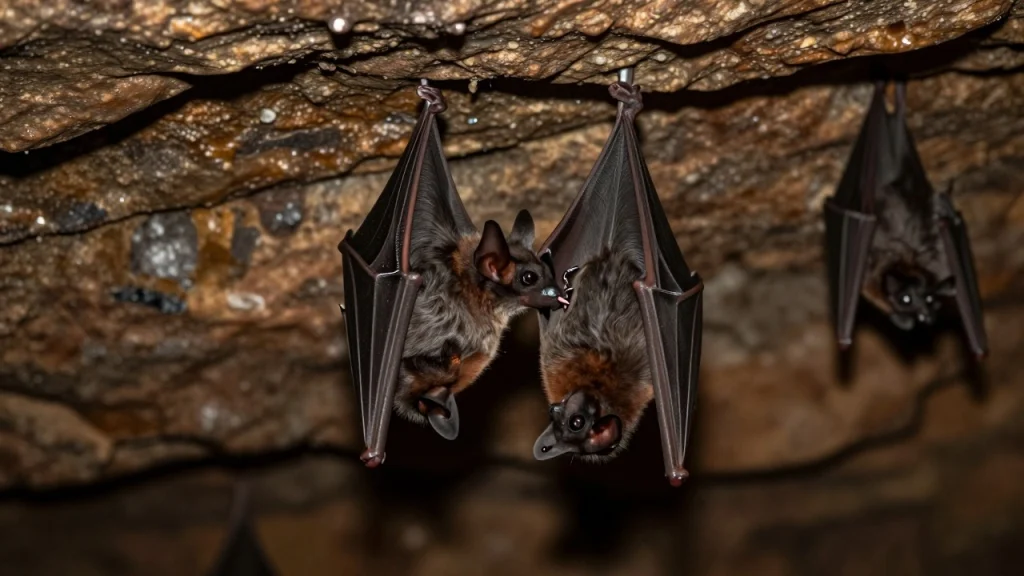
A single bat is said to get through 7.5 L of blood a year, so a colony’s blood budget is a serious matter. When a night goes badly, the loss is absorbed by its neighbours. Pups arrive well developed, at five to seven grams, and nurse on milk for their first month, then are introduced to blood meals regurgitated by the mother during their second month of life, and start following her on hunts at four months. Among adults the same exchange runs on grooming: a female gives up some of her blood meal to the bat that has just groomed her.
Bats and people
On people, the effect tends to be annoying rather than dangerous, and bites are uncommon because livestock are so much easier to find. The real hazard is rabies, and this bat passes it on to people and domestic livestock. In Latin America, where bat-transmitted rabies has caused heavy losses in cattle, the virus spread by these bats has now overtaken the virus spread by dogs.
That has put pressure on the species. Ranchers have used anticoagulant products nicknamed vampiricids continuously since the 1970s, but whether that prevents rabies transmission remains uncertain, and disturbing bat colonies may even raise rabies prevalence. The campaign is not a clean fix.
The vampires that never drink blood
Some frightening names mislead. The spectral bat, Vampyrum spectrum, is the biggest bat found in the New World, and it carries the name false vampire only because it was once thought to feed on blood. What it actually eats is animals: one roost contained 84 bird individuals from 18 species.
Conservation status and an odd success
The common vampire bat is not a threatened animal. The IUCN Red List places it in the least concern category, and its numbers have risen since livestock arrived in South America and provided an abundant new food source. In the wild the species can reach 12 years of age. The strange part is not that a blood diet proved workable, but that one of the very few mammal groups living on blood is thriving largely because of human herding.
Sources
- Animal Diversity Web: Desmodus rotundus (vampire bat) | INFORMATION
- San Diego Zoo Wildlife Alliance: Bat
- Nature Ecology & Evolution (PubMed Central): Hologenomic adaptations underlying the evolution of sanguivory in the common vampire bat
- Nature (PubMed Central): Ganglion-specific splicing of TRPV1 underlies infrared sensation in vampire bats
- Zoonoses and Public Health (PubMed Central): Anticoagulants for the Control of the Common Vampire Bat (Desmodus rotundus)
- Animal Diversity Web: Vampyrum spectrum (spectral bat) | INFORMATION