
Wild raccoons are often said to live 2 to 3 years, and both the San Diego Zoo and National Geographic give that figure as the average span in the wild. The number is right, but an average hides the shape of the curve: deaths are packed into the first two years of life, and the species account for the raccoon puts human activity, through hunting, trapping and cars, and malnutrition, at the top of the list of causes. A raccoon that gets past its first two years usually lives far longer than the headline number suggests.
The same account records wild raccoons reaching 16 years, yet notes that most never get past their second year. The Toronto Zoo frames that pattern as a normal wild span of 3 to 5 years, with captive animals occasionally reaching 12 to 16. So the short figure does not describe a body that wears out. It describes a species that dies young, and mostly for reasons that have little to do with old age.
Why the first two years are the dangerous ones
A newborn raccoon is blind and helpless when it comes into the world. The eyes open between 18 and 24 days of age, nursing ends at around 70 days, and once they reach 20 weeks the cubs are already out foraging at night beside their mother.
Even so, they stay with her through the first winter and only become independent early the following spring. For a juvenile that cannot yet feed competently or handle traffic, that is a long stretch of exposure.
Raccoons can afford such a slow start because they reproduce hard. A female typically raises one litter a year, and litters run from 3 to 7 cubs with 4 the usual number. Females mature before their first birthday while males mature at two years, so a young female may raise cubs of her own while she is still young herself.
This is a strategy of high output rather than long life, and it only holds together if each female produces enough young to absorb a heavy death rate.
People, not predators, take the most lives
The list of causes is just as revealing in what it leaves out. The animals that actually chase raccoons sit below human activity when it comes to how many lives end.
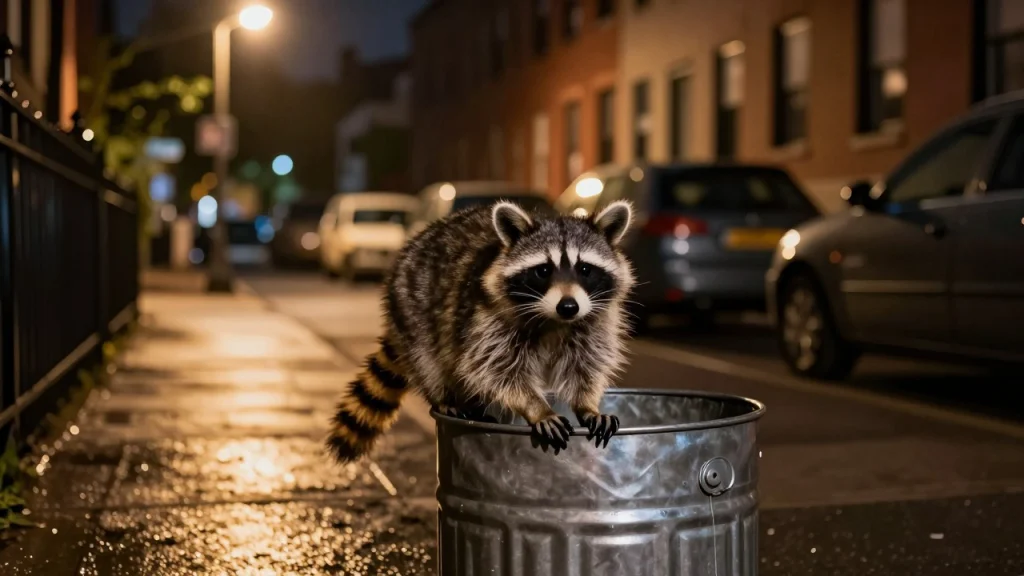
Where people are thickest, raccoons are also most numerous, with one population estimate reaching 600 individuals per square mile in the most urban areas. A nocturnal animal living at that density in a landscape of cars, attics and garbage cans meets human infrastructure constantly, and the cubs described above are the ones least able to dodge it.
The Toronto Zoo sees the same pressure from the other direction, noting that raccoons are killed because many people treat them as pests, and that development is destroying the natural habitat they den in.
Raccoons are among the few native North American animals that urbanization has not pushed back, they will open garbage cans, and they den in chimneys, attics and crawl spaces under homes. A raccoon that learns those resources has effectively bought itself a longer life.
Winter sets the second deadline
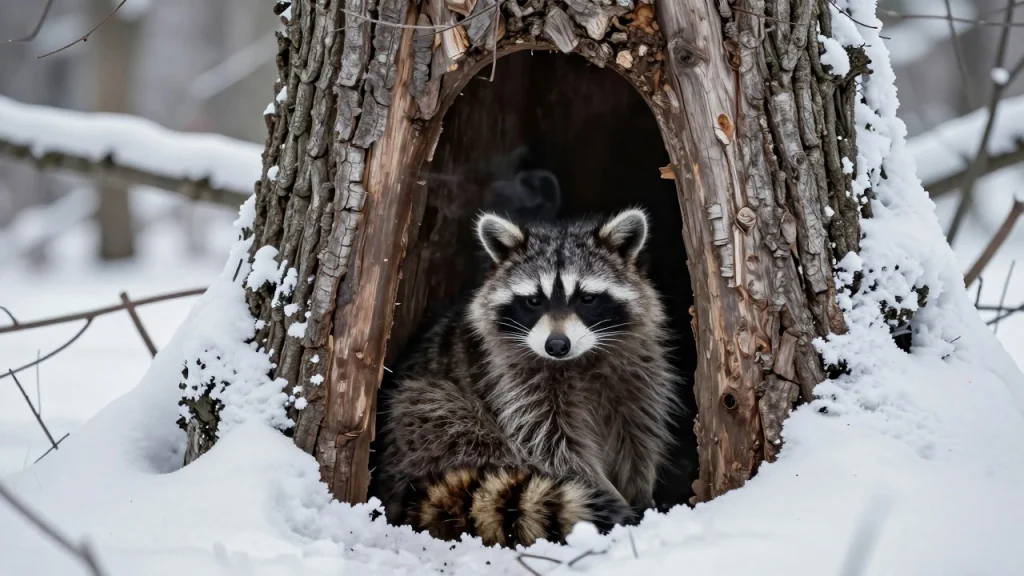
Malnutrition is the other primary cause of death, and cold is what turns it into a crisis. Raccoons do not hibernate. During extremely cold, snowy periods they sleep for long stretches, yet their metabolic rate and body temperature stay constant, so they must burn stored fat through the cold instead of dropping into a low-power state.
A typical adult weighs six to seven kilograms, which means the winter ration is stored fat rather than meals. A raccoon can burn through 50 percent of its body weight over the cold months, and winter dens can go without food for long stretches.
That is why the autumn feeding binge matters so much. As the season turns, the winter coat comes in, the animal feeds as heavily as it can, and it lays in stores of fatty nuts and seeds aimed squarely at the cold months ahead. Northern populations build up the largest fat stores, since that is the part of the range where winter presses hardest.
When an animal enters winter too thin to begin with, the reserve runs out before spring, and starvation finishes what hunting and traffic did not.
Predation is real but rarely decisive
Raccoons live alongside hunters far bigger than themselves, and the animals that hunt them include wolves, coyotes, large hawks and owls. Much of that risk is dodged by behavior, since they spend the daylight hours out of sight in a den.
A camera-trap study of raccoons and coyotes across Michigan caught the expected adjustment, with raccoons shifting toward daytime activity in places where coyotes were most active. What it did not catch was coyotes driving raccoon deaths: the authors judge the overall risk to be low, and earlier telemetry work recorded deaths caused by coyotes only as a rare occurrence.
Predation is the intuitive explanation here, and the data does not back it as the main one. A raccoon that spends the day in a den, keeps close to a den site and stays near reliable food has already dodged the riskiest parts of its environment.
Disease is feared more than it is measured
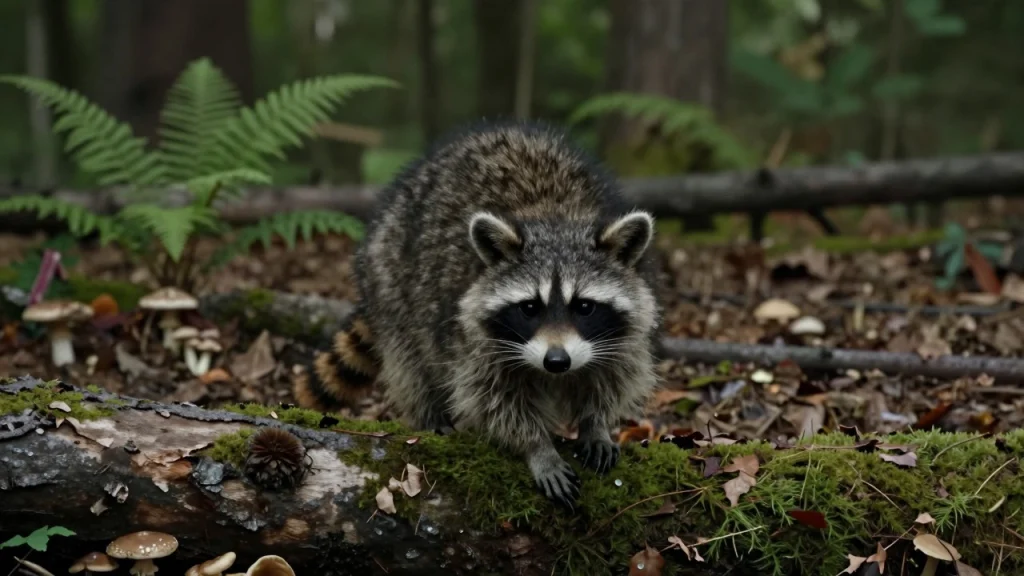
Raccoons are named as primary carriers of rabies, and they also carry sylvatic plague along with other diseases and parasites that people and domestic animals can pick up. A study of raccoons around Burlington, Vermont, based on 610 faecal samples taken from 510 animals, tested the natural suspicion that a heavy parasite load is what wears them down.
It found no link between those gut parasites and either body condition or deaths over the winter, and the authors judged the animals to be relatively tolerant of these infections, with signs that raccoons build resistance to roundworms as they get older.
The disease story is therefore real but a weak explanation for a short life. The animals that die young are more often those that never banked enough fat, met a car or a trap, or simply had a worse first winter than their neighbors.
How much life is left after the danger years
Wild raccoons that make it through youth have years of life ahead of them, and the ceiling in managed care is far higher than in the wild. One captive individual has been recorded reaching 21 years, and zoos report managed lifespans of up to 20 years.
Adults are not fragile creatures. They are solitary by design, with mothers and their young staying together for the first few months, and they are adaptable enough to live in many kinds of habitat and right beside people.
What that adaptability protects is the population rather than the individual. Raccoons thrive because they eat almost anything, breed quickly and move into human landscapes instead of being squeezed out of them. Their population trend is increasing, and the species account notes growth in numbers and a possible expansion of range since the turn of the century.
What the 2 to 3 year figure really means
Read the 2 to 3 year figure as a population average dominated by young deaths, not as a ceiling on how long any raccoon can live. As a species-wide statistic it says that raccoons lose most of their young to people, vehicles and winter, and that the individuals who clear those pressures go on for years, occasionally far longer.
The IUCN Red List, by contrast, puts the species in its Least Concern category, so this is the price of being a small, adaptable omnivore in a human landscape, not a story about decline. Only small, isolated island populations face a genuine threat.
Sources
- Animal Diversity Web, University of Michigan: Procyon lotor (Guadeloupe raccoon) | INFORMATION | Animal Diversity Web
- San Diego Zoo Wildlife Alliance: Raccoon | San Diego Zoo Animals & Plants
- National Geographic: Raccoon | National Geographic
- Toronto Zoo: Raccoon
- Ecology and Evolution (Malhotra, Lima and Harris, 2022), via PubMed Central: Temporal refuges of a subordinate carnivore vary across rural-urban gradient
- International Journal for Parasitology: Parasites and Wildlife (Wait et al., 2023), via PubMed Central: Demographic, environmental and physiological predictors of gastrointestinal parasites in urban raccoons