
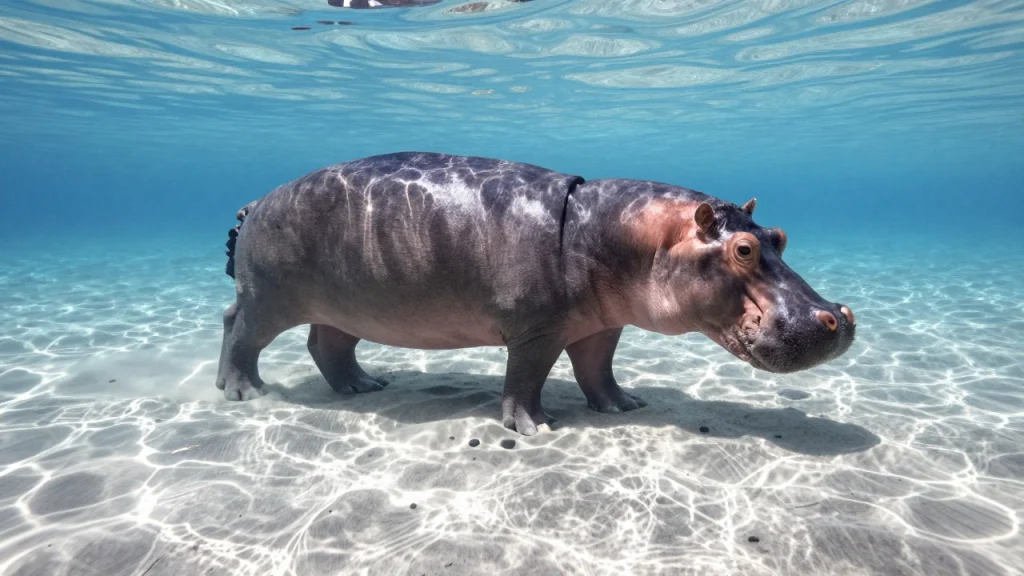
Despite spending most of their lives submerged in rivers, lakes, and swamps, hippopotamuses cannot actually swim. Their massive bodies are far too dense to float, so instead of swimming through deep water, they propel themselves by pushing off the bottom or moving along the riverbed.
When a hippo enters deep water, it sinks directly to the riverbed. To navigate through rivers, these large mammals execute underwater bounds, running along the sediment or performing a series of controlled jumps in a movement pattern that resembles slow-motion underwater running.
The truth about hippos in water
Hippos spend almost all of their daylight hours wallowing in shallow water, so many people assume they are good swimmers. However, their physical anatomy tells a very different story.
A hippopotamus has extremely heavy bones and dense muscle tissue, making buoyancy virtually impossible. Rather than floating gracefully like water mammals or paddling like dogs, a hippo relies on gravity to keep its feet planted on the river bottom.
In shallower depths, hippos simply walk along the sediment. When navigating deeper river channels where they cannot reach the bottom while keeping their heads above water, they push off from the substrate with their powerful hind legs, gliding through the water before touching down again to take another push.
How hippopotamuses move underwater
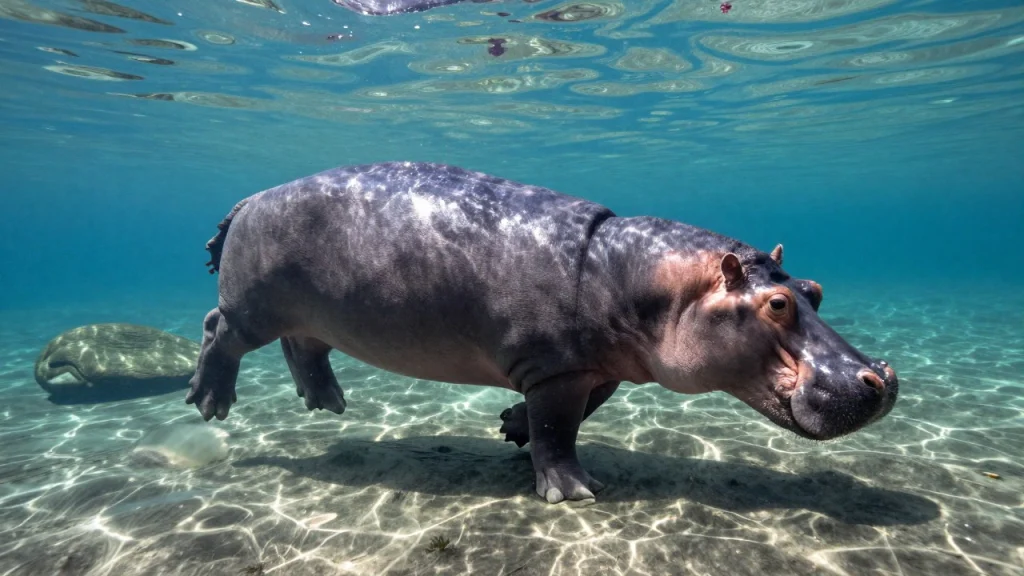
Hippos have developed specialized adaptations that allow them to move efficiently through aquatic environments without floating. Their underwater movement relies on momentum and strategic foot placement rather than paddling fins or webbed feet.
Key aspects of hippo locomotion underwater include:
- Riverbed bouncing: Pushing off the bottom with their feet to propel themselves forward in gracefully timed leaps.
- Controlled sinking: Exhaling to decrease body volume and sink immediately to the river floor.
- Streamlined body position: Holding their feet back while gliding short distances between pushes.
- Targeted tread: Walking steadily along established underwater paths in shallow river systems.
This unique form of aquatic locomotion requires far less energy than swimming would demand for an animal that can weigh up to about 4,500 pounds (2,065 kilograms).
Why hippos spend so much time submerged
If hippos cannot swim, why do they stay in the water for most of the day? The primary reason is temperature regulation and skin protection.
Hippopotamus skin is thick but remarkably sensitive. Prolonged exposure to intense tropical sun can cause severe dehydration and sunburn. Water keeps their skin cool and moist throughout the hottest daylight hours.
In addition to cooling their bodies, water provides a safe sanctuary from land-based heat and predators. While in the water, hippos also secret a reddish fluid often called “blood sweat,” which acts as a natural sunscreen and antibacterial moisturizer.
How hippos breathe underwater
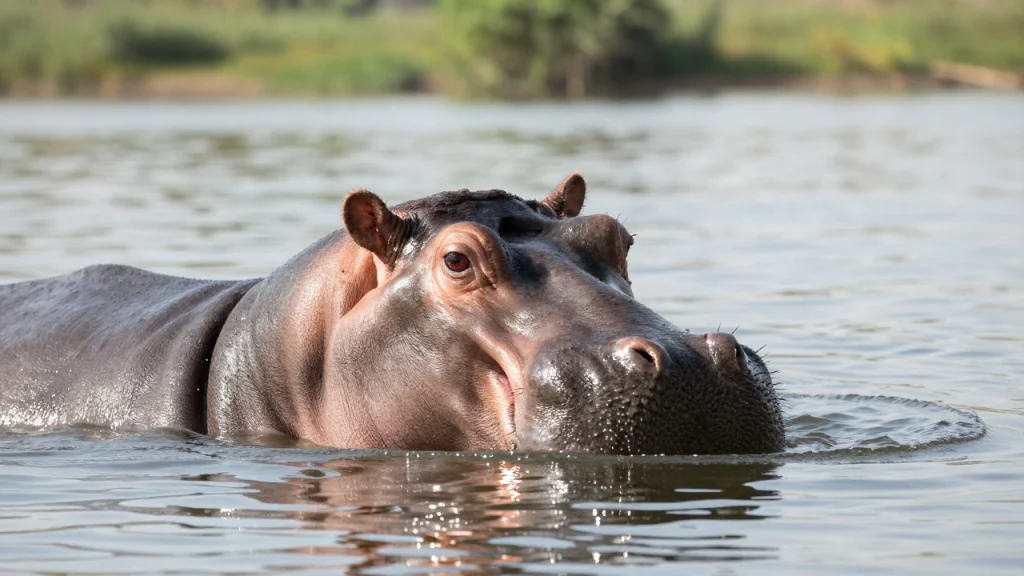
To remain underwater for extended periods, hippos rely on remarkable involuntary adaptations. An adult hippo can hold its breath for five minutes or longer when submerged.
When a hippo submerges completely, its nostrils and ears automatically fold shut to keep water out.
Nostrils close tightly -> Respiration pauses -> Body sinks or walks -> Nostrils open at surface
Interestingly, hippos can even sleep underwater. Their bodies naturally float up to the surface to take a breath without waking the animal, after which they sink back down to rest on the river floor.
Summary of hippo aquatic adaptations
The physical capabilities of hippopotamuses in aquatic habitats highlight how evolutionary adaptations solve environmental challenges without traditional swimming mechanisms.
- Hippos do not float or swim; their dense skeletal structures cause them to sink.
- They move through deep water by running, walking, or bouncing along the bottom.
- Water serves primarily as protection against sun exposure and heat rather than a place for free swimming.
- Automatic physical controls seal their airway and ears whenever they submerge.
Understanding these mechanisms clarifies why hippos are so deeply tied to aquatic ecosystems while remaining terrestrial walkers at heart.
Sources
- San Diego Zoo Wildlife Alliance: Hippo | San Diego Zoo Animals & Plants
- National Geographic: Hippopotamus, facts and photos | National Geographic
- Animal Diversity Web, University of Michigan: Hippopotamus amphibius (hippopotamus) | INFORMATION | Animal Diversity Web
- Milwaukee County Zoo: Hippopotamus – Milwaukee County Zoo
- Denver Zoo Conservation Alliance: River Hippopotamus – Denver Zoo Conservation Alliance