
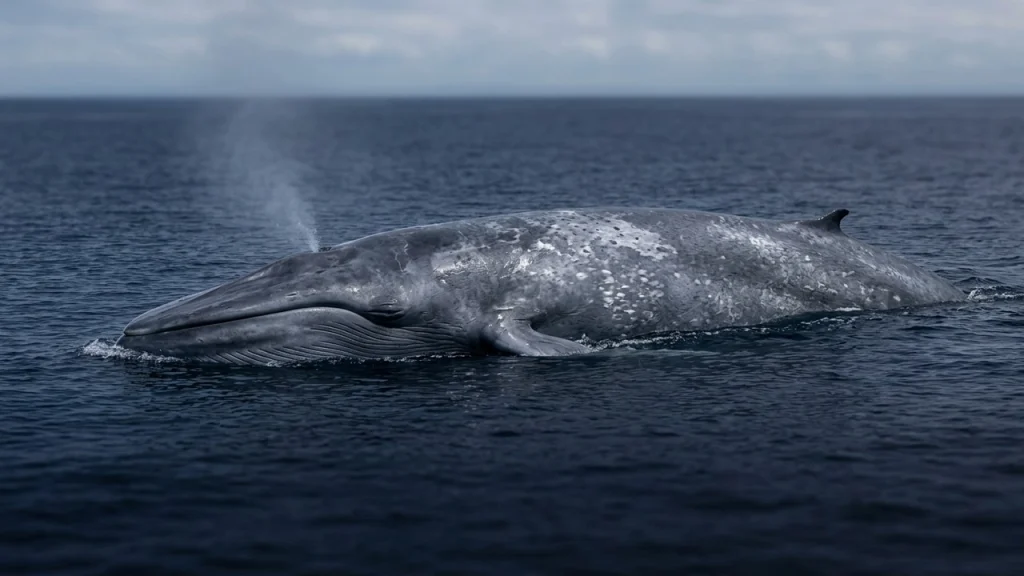
NOAA Fisheries puts a blue whale’s gestation period at approximately 10 to 12 months, based on the best available science. Animal Diversity Web gives a range of 11 to 12 months, and National Geographic says a baby blue whale spends about a year inside its mother’s womb.
NOAA Fisheries says most reproductive activity, mating and births included, takes place in winter. Animal Diversity Web adds that calves are born in warm, low latitude waters in winter, after the adults have come back from their high latitude feeding grounds.
How often females calve and when they mature
NOAA Fisheries estimates the average calving interval at 2 to 3 years. According to Animal Diversity Web, females reach sexual maturity at about 5 years of age or a length of about 21 to 23 m, and then produce young every 2 or 3 years.
Birth size, nursing and weaning
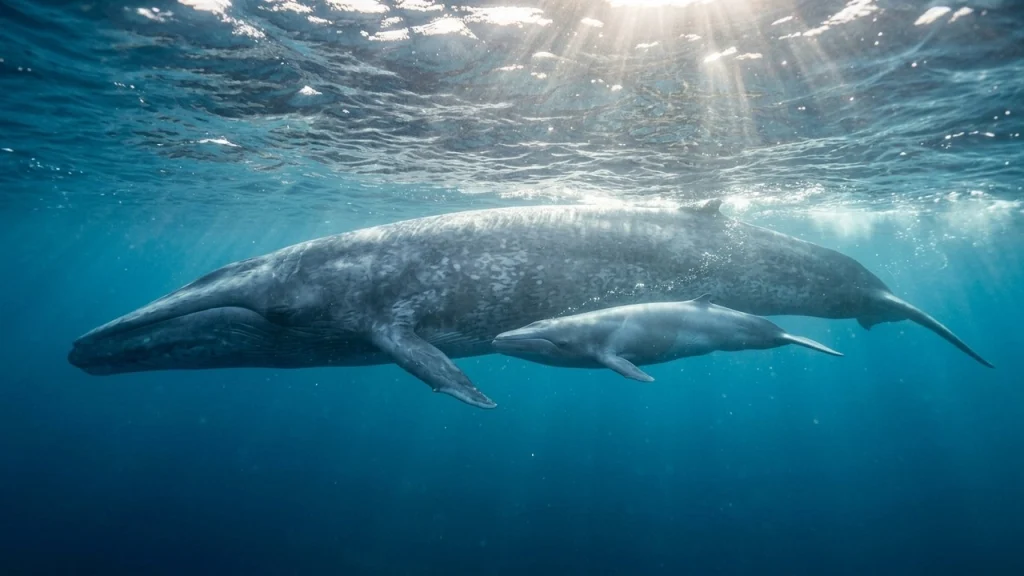
Animal Diversity Web puts the length of a newborn at 7 to 8 m. National Geographic says a newborn weighs up to 3 tons and stretches to 25 feet. Animal Diversity Web says a nursing blue whale can gain up to 90 kg of body weight a day.
NOAA Fisheries says weaning probably happens at around 6 to 7 months, on the summer feeding areas or on the way to them. Animal Diversity Web puts weaning after seven or eight months, usually once the calf has reached 16 m.
How big adult blue whales get
The blue whale (Balaenoptera musculus) is the largest animal known to have lived on Earth, according to National Geographic. Animal Diversity Web gives an average head-body length of 25 m for adult males and 27 m for females, and lists the longest confirmed specimen at 33.5 m and the heaviest at 190,000 kg. In the Antarctic, NOAA Fisheries says, blue whales can reach up to about 110 feet, and they can weigh more than 330,000 pounds.
Feeding grounds, migration and diet
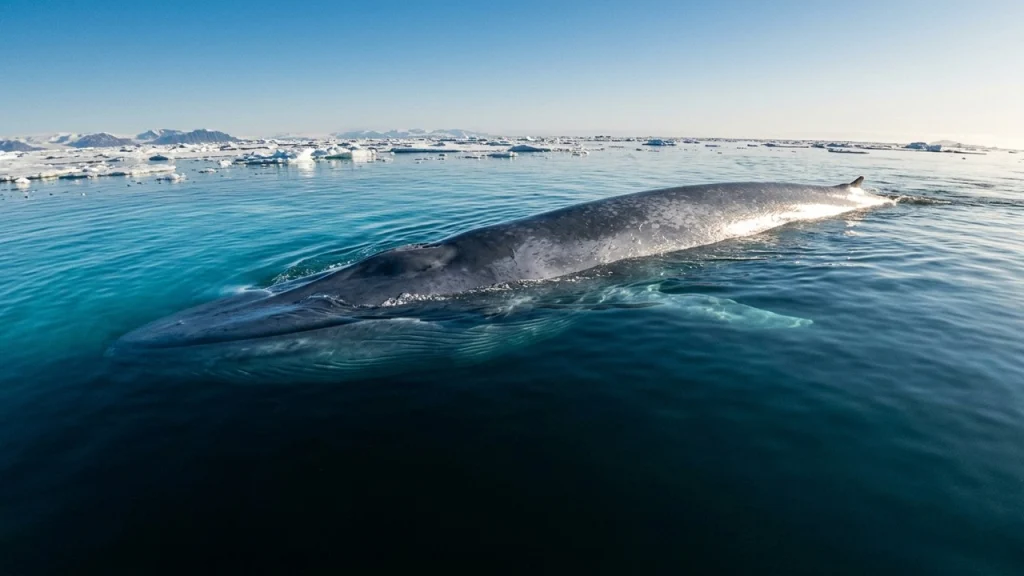
According to NOAA Fisheries, blue whales live in every ocean except the Arctic. In summer they generally feed in polar waters, then head long distances toward equatorial waters as winter arrives.
Animal Diversity Web says the diet is principally krill, and NOAA Fisheries says blue whales feed almost exclusively on it. Baleen plates hanging from the roof of the mouth act like a sieve as the whale strains huge volumes of ocean water. Adult whales can take in 3 to 4 tons of krill a day, according to Animal Diversity Web, while NOAA Fisheries says some of the largest individuals may eat as much as 6 tons in a day.
Lifespan and predators
NOAA Fisheries estimates the average lifespan of blue whales at around 80 to 90 years. Scientists can estimate a whale’s age by counting the layers in wax-like earplugs recovered from dead animals, and National Geographic says the oldest blue whale aged this way was around 110 years old.
Animal Diversity Web says blue whales have virtually no natural predators, owing to their extreme size. It adds that calves may be vulnerable to being preyed on by orcas and large sharks.
Population and conservation
National Geographic reports that some 360,000 blue whales were slaughtered between 1900 and the mid-1960s. Animal Diversity Web lists the species as Endangered on the IUCN Red List, and National Geographic lists its current population trend as Increasing.