
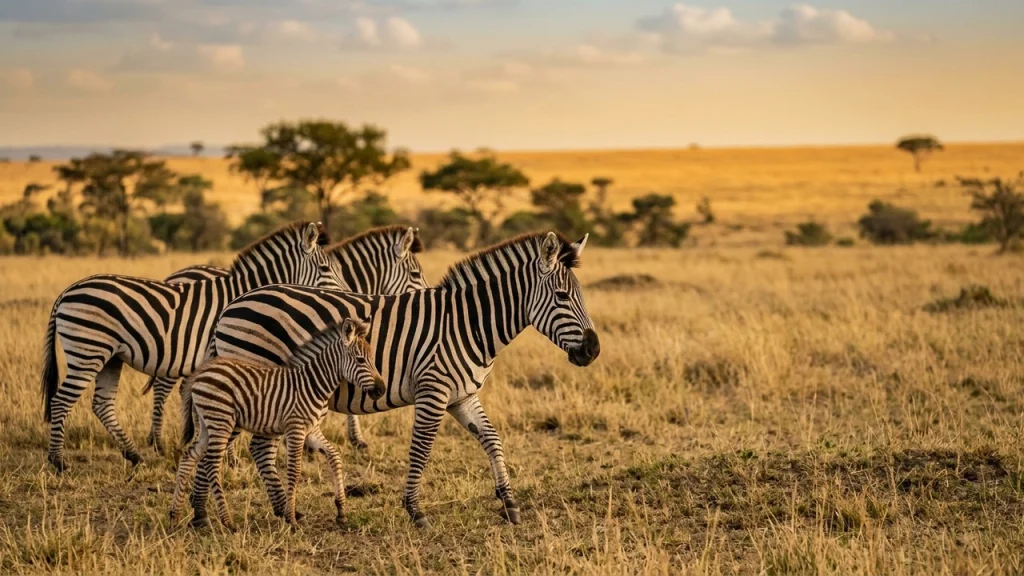
Zebras average 12 to 17 years, depending on the species, according to the San Diego Zoo Wildlife Alliance. In the wild, Animal Diversity Web puts the average for Burchell’s zebras at 9 years, says mountain zebras usually live 20 or more years, and gives a median age of 12 or 13 for Grevy’s zebras, with one 18-year-old reported. Smithsonian’s National Zoo gives 20 to 25 years for wild Grevy’s zebras and says wild Hartmann’s zebras usually live between 10 and 20 years.
In captivity or human care, Animal Diversity Web says Burchell’s zebras can survive up to 40 years. Smithsonian’s National Zoo says Grevy’s zebras in human care live to between 25 and 30 years and Hartmann’s zebras can live up to 30 years. Animal Diversity Web lists the oldest documented mountain zebra in captivity as an E. z. hartmannae that reached 29 years and 6 months.
Predators and speed
For Burchell’s zebras, Animal Diversity Web says the number of predators is what limits them, whereas the amount of grass limits grazers such as gazelles and wildebeests. It also calls foals especially vulnerable, reporting that predation kills 50% of juveniles each year.
When chased, Burchell’s zebras reach speeds up to 55 miles per hour, according to Animal Diversity Web. San Diego Zoo Wildlife Alliance says zebras hear and see very well and can run faster than 40 miles per hour. Their powerful kick can seriously injure a predator such as a lion, a hyena or an African wild dog.
Pregnancy and growing up
San Diego Zoo Wildlife Alliance gives a gestation of 12 to 14 months and one young at birth. Smithsonian’s National Zoo says Grevy’s females usually give birth to a single foal after a pregnancy of 390 days, the longest gestation of any equid.
In Grevy’s zebras, mares reach sexual maturity at two to three years and stallions at six years. Grevy’s females become independent at 13 to 18 months.
Animal Diversity Web says female mountain zebras have their first foals between 3 and 6 years of age and may stay reproductively active until about age 24. Smithsonian’s National Zoo says Hartmann’s foals stop nursing after about 10 months, although they start eating grasses after about 2-3 months.
Food and water
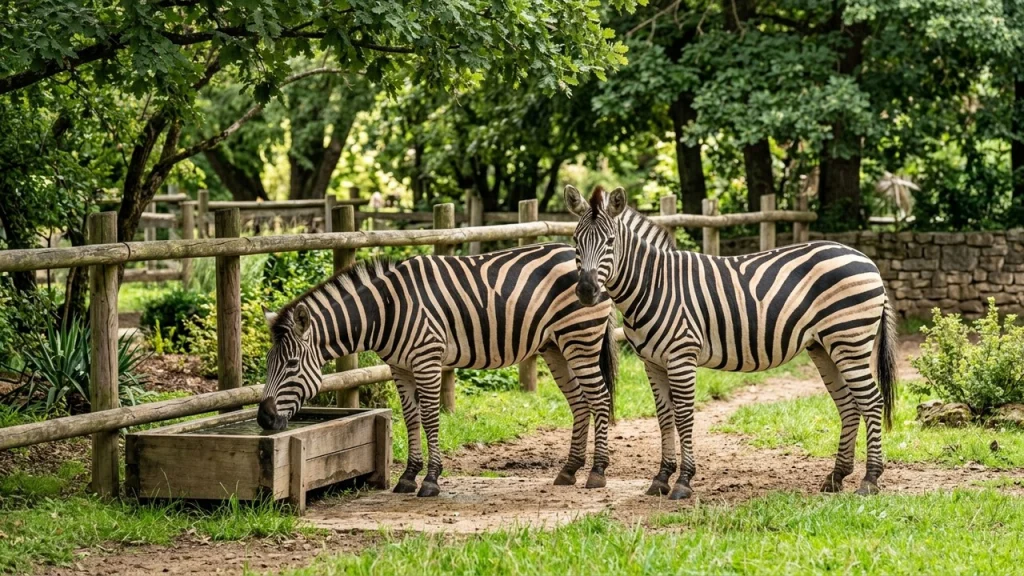
Zebras are herbivores that feed mostly by grazing on grasses, and they may browse a little on the leaves and stems of bushes, San Diego Zoo Wildlife Alliance says.
Grevy’s zebras eat mostly grasses, though they also take bark, fruit and leaves, and they spend about 60 percent of their day eating, according to Smithsonian’s National Zoo. Animal Diversity Web says most Grevy’s zebras can go without water for up to five days, while lactating females must drink at least every other day to keep milk production healthy.
Habitat and conservation status
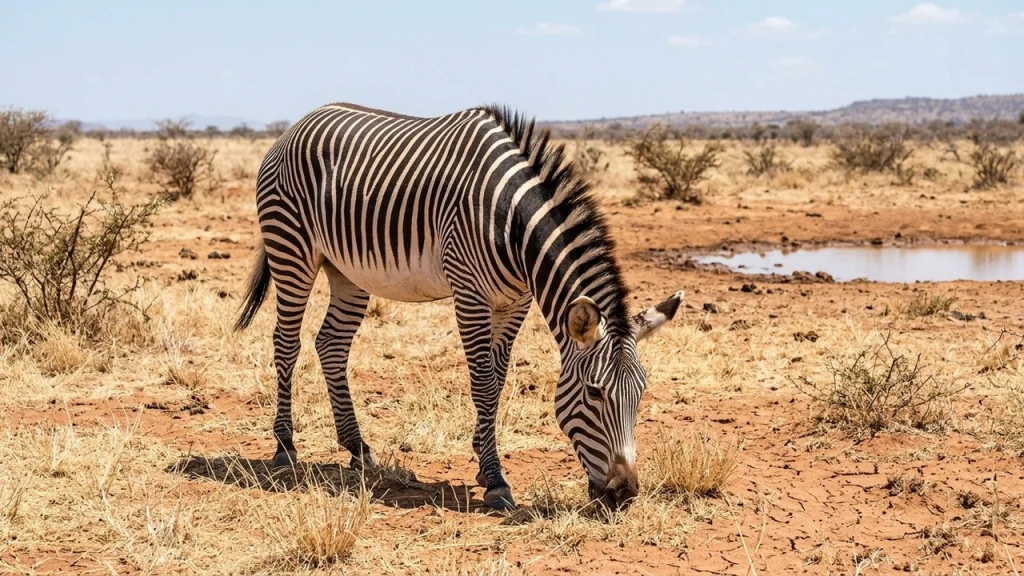
San Diego Zoo Wildlife Alliance recognizes three zebra species: plains, mountain and Grevy’s. Grevy’s zebras live in semi-arid grassland in Kenya, Ethiopia and Somalia, and mountain zebras live on rocky, arid slopes in Namibia and Angola. Plains zebras, the most abundant of the three, are found from East Africa’s grasslands to southern Africa’s scrubby woodlands.
Smithsonian’s National Zoo says Grevy’s zebras are endangered and there may be fewer than 2,500 in the wild. For Hartmann’s mountain zebras, it reports fewer than 25,000 individuals left in the wild. The biggest threat, it says, is habitat loss and fragmentation caused by livestock production and agriculture.
Sources
- Smithsonian’s National Zoo: Grevy’s Zebra
- Smithsonian’s National Zoo: Hartmann’s Mountain Zebra
- Animal Diversity Web: Equus grevyi (Grevy’s zebra) INFORMATION
- Animal Diversity Web: Equus zebra (mountain zebra) INFORMATION
- Animal Diversity Web: Equus burchellii (Burchell’s zebra) INFORMATION
- San Diego Zoo Wildlife Alliance: Zebra | San Diego Zoo Animals & Plants