
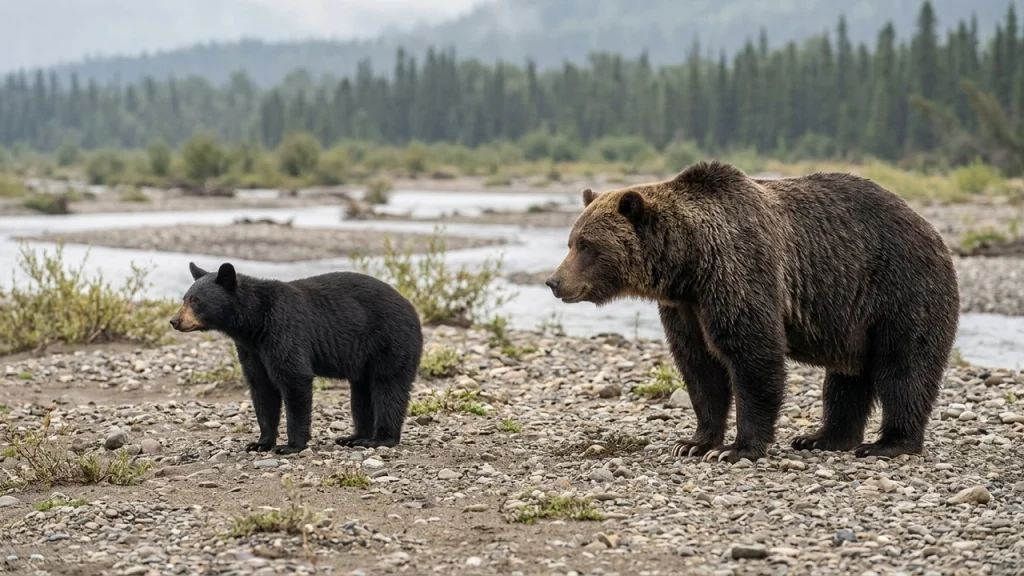
The U.S. National Park Service reported an analysis drawing on 18 studies from across North America, which put brown bears generally the larger of the two species and described both as sexually dimorphic, with males generally the bigger sex. The comparison describes a pattern across many populations, not the size of one animal.
The two species have separate published weight ranges. Brown bears weigh from 80 kg to more than 600 kg, Animal Diversity Web at the University of Michigan records. For the American black bear, males reach 47 to 409 kg, while females run 39 to 236 kg, and the National Park Service puts adult black bears between 90 and 272 kg.
How the two species compare in size
Adult brown bear males run 8 to 10% larger than females on average, Animal Diversity Web at the University of Michigan reports. In the North American analysis, male brown bears tended to be bigger next to their own females than black bear males were.
Two details round out the picture. Among the bear species of North America, the black bear remains the smallest, and that same analysis found no effect of harvest on body size at the population level.
Brown bear weights by region
Regional averages show how wide the spread among brown bears is. Animal Diversity Web at the University of Michigan reports that on the southern Alaskan coast and the islands beside it, males average 389 kg and females 207 kg, and that some males have been weighed in at up to 780 kg. That last figure is a measured maximum for individual animals rather than an average.
The same reference work records bears in southwestern Yukon averaging only 140 kg.
Latitude, salmon and competition
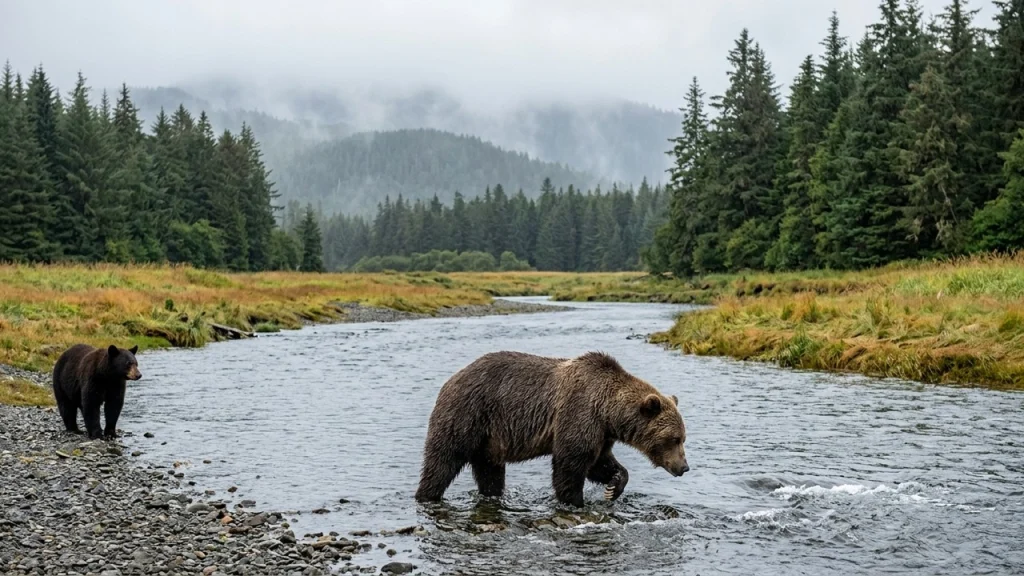
Where a bear lives matters for one of the two species and not the other. Black bears, the analysis found, hold roughly one size whatever their latitude, while brown bears reach larger sizes around the middle of their range and come out smaller toward both ends of it. The authors suspect that access to more resources is behind the bigger sizes, and they treat the extra salmon available at mid-latitudes as the likely reason for the shift.
A brown bear in autumn may cover hundreds of kilometers to reach better feeding, salmon streams among the destinations. The same authors suggest that brown bears can outcompete black bears when the two are after the same resources, salmon among them.
Length, height and how the two look
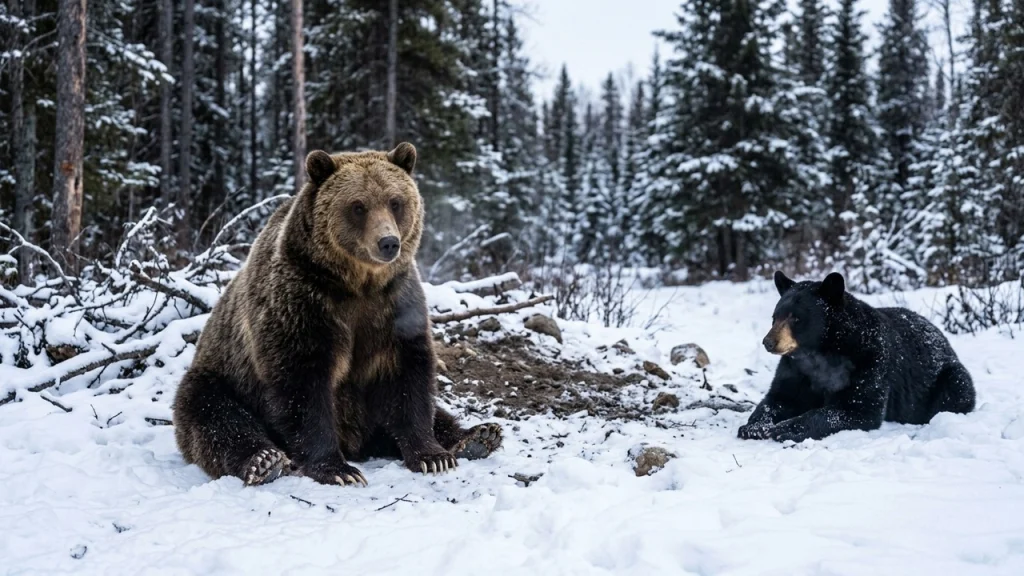
Weight is only one measure. Listed under the name grizzly bear, the brown bear measures 1 to 2.8 meters from head to rump, according to Animal Diversity Web at the University of Michigan. Shoulder height for brown bears runs 90 to 150 cm, and a standing animal on its hind legs can reach a height of 8 feet. American black bear males measure 1400 to 2000 mm in total length, and females 1200 to 1600 mm.
Shape separates the two in the field. The San Diego Zoo Wildlife Alliance fact sheet points to the grizzly’s shoulder hump, which the black bear lacks, and sets the short rounded grizzly ears against the larger, more pointed ears of the black bear. A black bear’s back runs flat, and the grizzly name comes from the Rocky Mountain bears, whose shoulder and back hairs are long and frosted with white in a grizzled look.
Sources
- Animal Diversity Web, University of Michigan: Ursus arctos (brown bear) | INFORMATION
- Animal Diversity Web, University of Michigan: Ursus americanus (American black bear) | INFORMATION
- U.S. National Park Service: American Black Bear
- U.S. National Park Service: How brown and black bear body sizes compare across North America
- San Diego Zoo Wildlife Alliance: Physical Characteristics – Brown Bear (Ursus arctos) Fact Sheet
- PLOS ONE (via PubMed Central): Viruses in unexplained encephalitis cases in American black bears (Ursus americanus)