
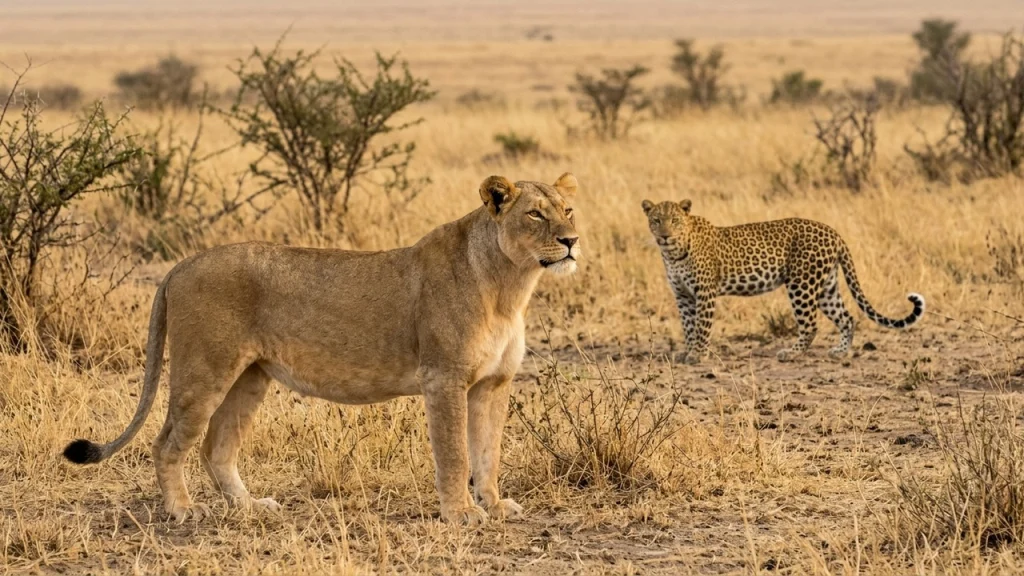
Lions, together with packs of hyenas and painted dogs, can kill leopards, and lions made them wait farther off than any other rival predator did. In Ecology and Evolution, researchers observed that leopards viewed lions as their primary danger when selecting spots to rest.
Predator encounters and avoidance in the wild
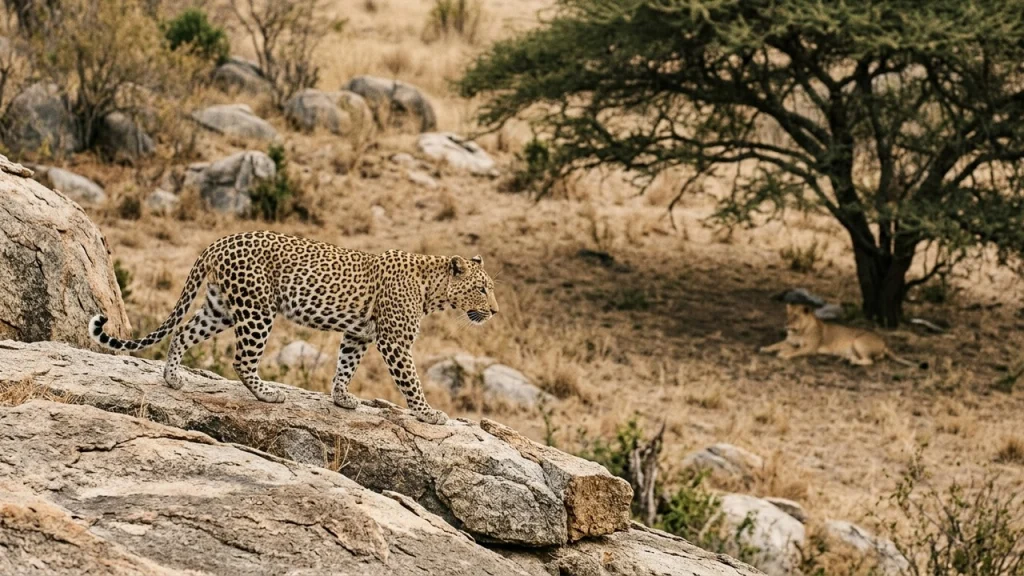
Leopards make great efforts to evade these predators by hunting at different times, often chasing different prey, and resting in trees to avoid notice. Even so, research in Ecology and Evolution notes that storing food in trees helps leopards dodge ground scavengers like hyenas, yet fails to block competitors equipped for climbing, including other leopards and lions. Smithsonian’s National Zoo and Conservation Biology Institute adds that lions take meat away from leopards, hyenas and other hunters.
The study in Ecology and Evolution examined leopard feeding behavior at Malilangwe Wildlife Reserve in Zimbabwe using baited camera trap locations. Without lions around, leopards in the study generally remained near baits at under 72 m away, but lions forced them to wait farther off than any other rival predator.
Size, body mass and physical weapons
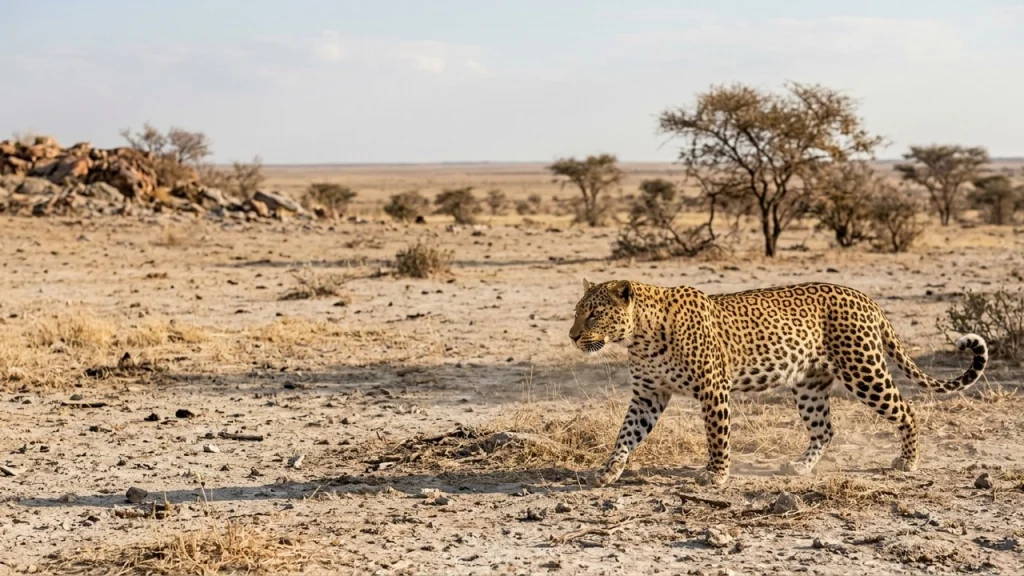
Among the big cats the leopard is the smallest. Its library fact sheet gives a leopard mass of 37 to 90 kg (82 to 198 lb) as well as a separate listing of 28 to 60 kg (62 to 132 lb), with head and body length between 910 and 1,910 mm (3.0 to 6.3 ft). As the most massive subspecies, the Persian leopard reaches up to 90 kg, whereas an Arabian leopard weighs 20 to 30 kg. Furthermore, leopard tooth roots exceed half of the total tooth length and are anchored against breakage.
The same library’s lion fact sheet identifies the lion as Africa’s largest carnivore and the second largest feline overall. It records lion weights of 150 to 225 kg (331 to 496 lb) alongside an individual record reaching 272 kg (600 lb), plus another listing of 122 to 192 kg (269 to 423 lb). Head and body length extends from 172 to 250 cm (5.6 to 8.2 ft), paired with a prominent sagittal crest, wide zygomatic arches, and a massive lower jaw.
Hunting methods, agility and social structure
Smithsonian’s National Zoo and Conservation Biology Institute describes lions as having solid, compact frames alongside stout limbs and jaws designed for bringing down prey, possessing forelimbs built for attacking instead of prolonged pursuits. According to the San Diego Zoo Wildlife Alliance, a female lion frequently cuts off a quarry’s breath by locking her jaws across the mouth and snout, and she can accelerate up to 33 miles (53 kilometers) per hour.
Leopards demonstrate different athletic feats, running over short bursts up to 36 miles per hour (58 kilometers per hour), leaping 20 feet (6 meters) forward in one bound, and jumping ten feet (3 meters) upward. Recognized as the most arboreal big cats, they use long tails to maintain footing on narrow limbs, and an individual can ascend 50 feet (15 meters) into a tree carrying prey that weighs more than itself. The San Diego Zoo Wildlife Alliance notes that leopard prey dies from a throat bite, and leopards eat any meat they find, including baboons, rodents, large birds, monkeys, snakes, fish, amphibians, antelope, warthogs, porcupines and cheetah cubs.
According to the San Diego Zoo Wildlife Alliance, fighting among male leopards happens commonly and can prove deadly. Lions alone live in prides of 3 to 30 members, where females raise cubs and handle most hunting, while Smithsonian’s National Zoo and Conservation Biology Institute notes young males are expelled from prides when large enough to challenge dominant males, usually between ages 2 and 4. The San Diego Zoo Wildlife Alliance reports a male lion’s thick mane protects his neck from raking claws in territory or breeding fights, though its library fact sheet notes researchers suggest the mane offers minimal benefit against neck wounds, with the forehead and hindquarters usually targeted instead.
Sources
- San Diego Zoo Wildlife Alliance: Leopard | San Diego Zoo Animals & Plants
- San Diego Zoo Wildlife Alliance: Lion | San Diego Zoo Animals & Plants
- San Diego Zoo Wildlife Alliance Library: Physical Characteristics – Leopard (Panthera pardus) Fact Sheet
- San Diego Zoo Wildlife Alliance Library: Physical Characteristics – African and Asian Lions (Panthera leo) Fact Sheet
- Ecology and Evolution (Wiley): The effect of competing carnivores on the feeding behaviour of leopards (Panthera pardus) in an African savanna
- Smithsonian’s National Zoo and Conservation Biology Institute: Lion | Smithsonian’s National Zoo and Conservation Biology Institute