
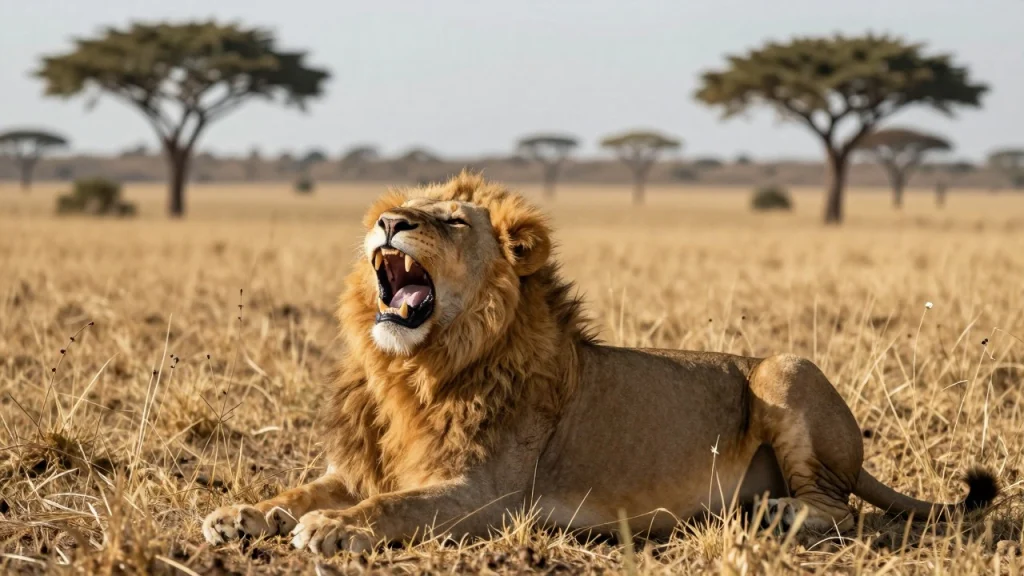
An adult lion possesses an estimated bite force of approximately 1,000 pounds per square inch (PSI). While this level of jaw power is capable of crushing bone and tearing through tough hide, it is still lower than some of the strongest bites in the animal kingdom, such as the jaguar’s or a crocodile’s.
Understanding the bite force of a lion requires looking at how these big cats hunt and kill their prey. Rather than relying solely on raw crushing force, lions use a combination of jaw pressure, specialized teeth, and social hunting techniques to subdue large ungulates on the African savanna.
Understanding lion bite force in PSI
Bite force is commonly measured in pounds per square inch (PSI), which quantifies the amount of pressure exerted over a single square inch of surface area. For lions, scientists and researchers estimate the bite force at around 1,000 PSI, the same order of magnitude reported for hyenas and tigers.
In the wild, a lion’s bite does not need to shatter thick skeletal structures immediately. Instead, their physical adaptations work together to deliver an efficient, lethal hold on prey.
How lions compare to other wild animals
A lion’s bite force is significantly stronger than an average human bite (around 150 to 200 PSI). Even so, some other predators bite about as hard or harder:
- Spotted hyena: ~1,000 PSI
- Saltwater crocodile: ~3,700 PSI
Even among big cats, the jaguar has one of the strongest bites relative to size, often using its jaws to pierce the skulls or shells of its prey.
Anatomical features behind a lion’s jaw strength
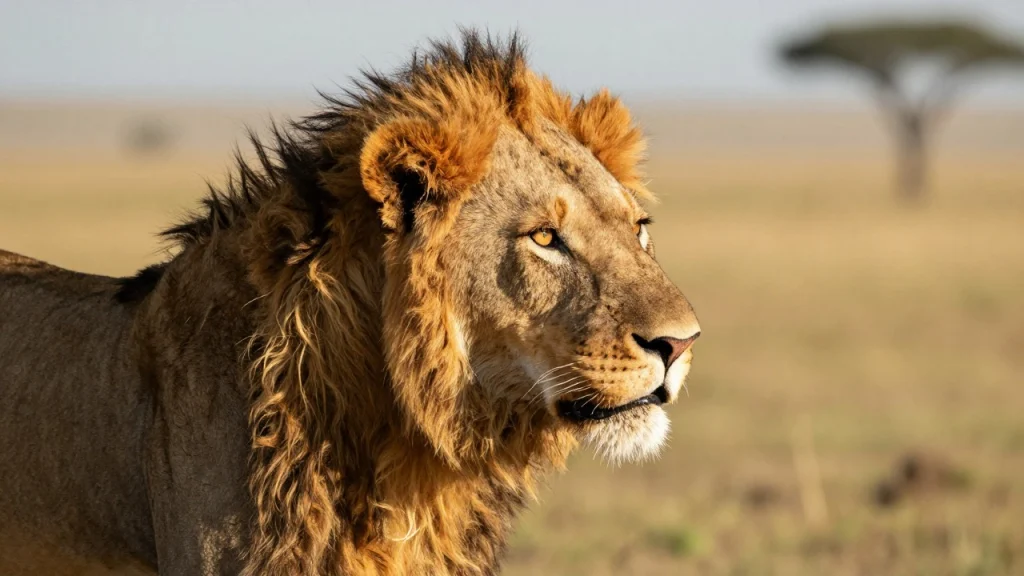
A lion’s jaw mechanics are optimized for gripping and holding struggling prey rather than grinding food. Several evolutionary adaptations contribute to their biting efficiency.
Skull structure and muscle attachment
The skull of a lion features a large sagittal crest, a ridge of bone along the top of the skull. This structure serves as an anchor point for powerful jaw muscles, primarily the temporalis muscles. These muscles pull the lower jaw upward with continuous strength.
In addition, the wide zygomatic arches (cheekbones) allow space for massive masseter muscles, giving lions the strength needed to hold onto large prey items like zebras, wildebeests, and buffalo.
Dental structure and hunting technique
An adult lion has 30 teeth specifically shaped for a carnivorous diet:
- Canines: Reaching approximately 2 inches (50 mm) in length, these long teeth anchor deeply into prey to prevent escape.
- Carnassials: Specialized cheek teeth that work like scissors to shear through meat and hide.
Lions typically kill large prey through asphyxiation rather than crushing bones. They clamp their jaws over the victim’s muzzle or throat, closing off the airway until the animal succumbs. This hunting strategy relies on sustained pressure rather than an explosive, bone-breaking bite.
The role of group hunting in compensating for bite power
Lions are the only truly social felid species, living in groups called prides. This social structure plays a critical role in their survival and compensates for what they might lack in individual bite force compared to solitary hunters like jaguars or bears.
Teamwork vs. individual strength
When hunting large ungulates such as Cape buffalo or giraffes, lions rely on coordination:
- Female lions (lionesses) conduct most of the strategic stalking and surrounding.
- Multiple lions work together to bring down animals weighing over 1,000 pounds.
- Once the prey is grounded, one lion secures the suffocating bite while others restrain the animal.
By hunting in prides, lions do not require extreme individual jaw pressure to secure food for the group. Their strength lies in cooperative tactics, stealth, and endurance during the final ambush.
Summary of lion bite strength
A lion’s bite force of roughly 1,000 PSI is perfectly tailored to its ecological niche. While it may not match the immense force of a jaguar or a crocodile, a lion’s jaw mechanics, sharp teeth, and pride-based hunting strategy make it one of the most effective apex predators on Earth.
Sources
- National Geographic: Crocodiles Have Strongest Bite Ever Measured, Hands-on Tests Show
- Animal Diversity Web: Panthera leo (lion)
- San Diego Zoo Wildlife Alliance: Physical Characteristics – African and Asian Lions (Panthera leo) Fact Sheet
- Proceedings of the Royal Society B (Wroe, McHenry & Thomason 2005, hosted by University of Tennessee): Bite club: comparative bite force in big biting mammals and the prediction of predatory behaviour in fossil taxa
- National Geographic: African lion, facts and photos
- San Diego Zoo Wildlife Alliance (International Environment Library Consortium): Diet & Feeding – African and Asian Lions (Panthera leo) Fact Sheet – LibGuides at International Environment Library Consortium