
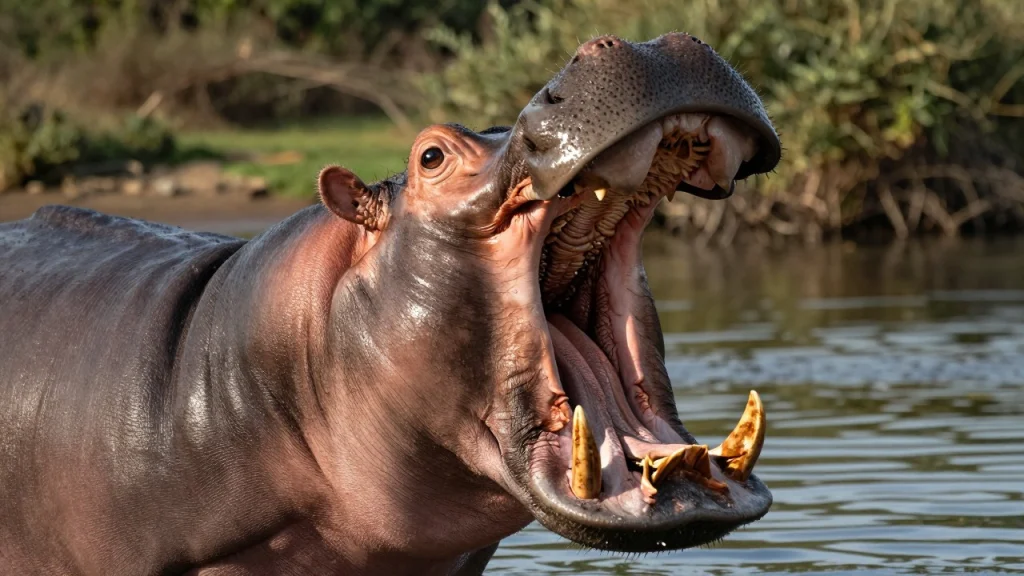
Yes, hippopotamuses have teeth in their upper jaw, as well as in their lower jaw. Their impressive mouth structure includes sharp incisors and massive tusks (modified canine teeth) embedded in both the top and bottom jaws. While the lower tusks are significantly longer and more prominent, the upper jaw contains matching tusks and incisors that play a crucial role in feeding and defense.
Understanding the anatomy of a hippopotamus jaw reveals how these semi-aquatic giants eat, interact, and defend their territory in wild African ecosystems.
Dental structure of the hippopotamus jaw
Adult common hippopotamuses have 36–40 permanent teeth, depending on the number of premolars present. Each jaw holds four incisors, two canines, six to eight premolars, and six molars. The teeth in the upper jaw line up directly with those in the lower jaw, creating a formidable dental apparatus designed for both grinding vegetation and warding off rivals.
+------------------------------------------------------+
|             Hippopotamus Dentition Overview          |
+------------------+-----------------+-----------------+
| Tooth Type       | Upper Jaw Count | Lower Jaw Count |
+------------------+-----------------+-----------------+
| Incisors         | 4               | 4               |
| Canines (Tusks)  | 2               | 2               |
| Premolars        | 6-8             | 6-8             |
| Molars           | 6               | 6               |
+------------------+-----------------+-----------------+
| Total Per Jaw    | 18-20 teeth     | 18-20 teeth     |
+------------------+-----------------+-----------------+
Upper incisors and upper canine tusks
The upper canine teeth, often referred to as upper tusks, are shorter than the dramatic, curved lower tusks, but they are equally sharp. These upper tusks grow continuously throughout the hippo’s life and work closely alongside the lower canines.
The upper incisors protrude downwards from the front of the maxilla (the upper jawbone). They serve as robust structural anchors and assist in clipping vegetation or displaying dominance during territorial gaping matches.
How upper and lower teeth work together
The interaction between the upper and lower teeth is self-sharpening. Every time a hippopotamus opens and closes its mouth, the upper tusks rub against the lower tusks.
This continuous friction wears away the enamel along the edges, keeping both upper and lower canine teeth lethal and razor-sharp.
Function of upper teeth in daily survival
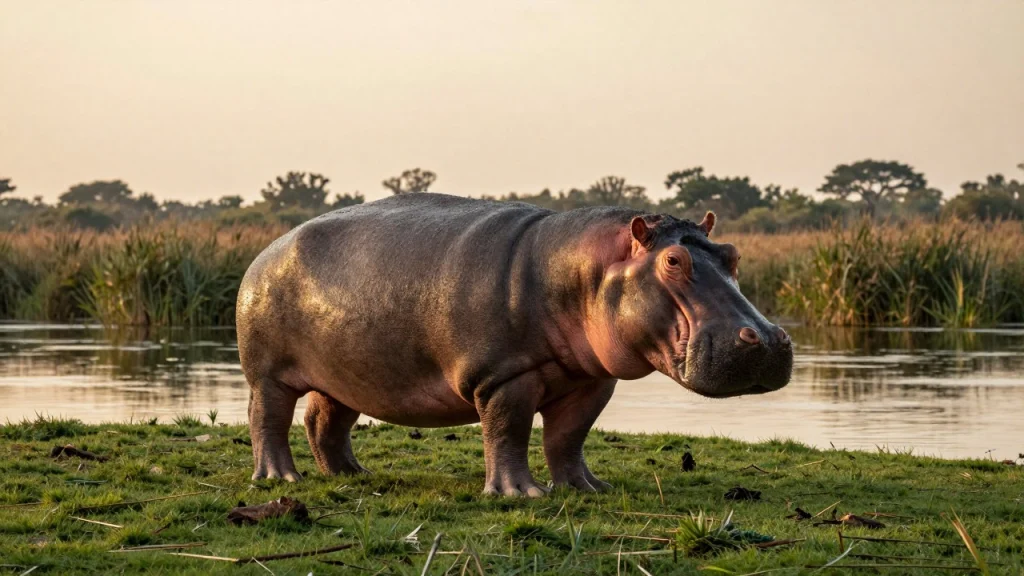
Although hippos use their tough, muscular lips rather than their front teeth to crop grass while grazing at night, their upper teeth fulfill essential roles in protection, social hierarchy, and digestive processing.
- Defense and combat: The sharp upper tusks act as secondary weapons during violent territorial clashes between bulls or when defending calves against predators like crocodiles and lions.
- Chewing and digestion: The flat upper molars located further back in the jaw grind tough grasses before swallowing, enabling efficient digestion of fibrous plant material.
- Structural alignment: The upper dental arch provides the necessary mechanical leverage required to sustain the hippo’s extraordinary bite force.
Common misconceptions about hippo teeth
Because the lower tusks of a hippopotamus can extend up to 20 inches (50 cm) and are clearly visible when a hippo opens its mouth, many people assume the upper jaw lacks teeth or tusks altogether.
In reality, the upper teeth are recessed slightly further back into the skull structure, making them less obvious from a distance. However, without the presence of the upper tusks to wear down the lower ones, a hippo’s lower tusks would grow unchecked and impede its ability to close its mouth properly.
Hippopotamuses rely heavily on the complete, balanced arrangement of both upper and lower teeth to navigate their semi-aquatic habitats, defend their pods, and process their nightly meals.