
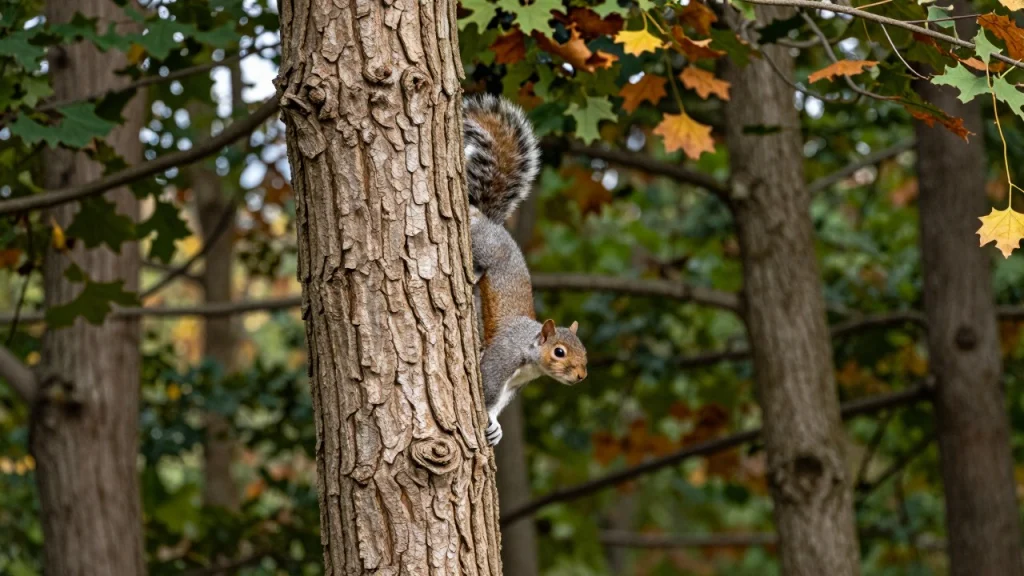
Wild squirrels that survive their first year typically live three to five years, and most do not survive it. Squirrels are short-lived for mammals their size, and the gap between the record and the everyday reality is wide. The longest wild lives ever recorded for the family run from 8 to 14 years, and squirrels in human care have reached 16 years or more.
The more useful figure comes from wildlife managers in Washington state: most of them are gone within their first year, and the ones that make it typically live three to five years. The squirrels most people picture, the ones that turn up in suburbs and cities, sit well inside that range. What separates the ceiling from the average is a list of hazards, a set of species-specific records, and one large seasonal question, which is whether a squirrel faces winter in a treetop nest or dormant underground.
Predation and other hazards decide most lives
Red squirrels show the pattern in its clearest form. In wild populations they follow a type 3 survivorship curve, the shape biologists use when mortality is concentrated among the young, and only 25% of them survive longer than one year. That steep early drop is the defining feature of a squirrel life history.
Predators do much of the culling, and the cast is long. Washington’s wildlife agency splits the risk by height: in the canopy a squirrel is relatively safe apart from an occasional owl or goshawk, and the moment one comes down, big hawks and owls, cats, dogs and coyotes are all taking a share. The eastern gray squirrel, the familiar North American species, draws an even wider list, with American mink, red foxes, wolves, lynx and red-tailed hawks among the hunters recorded for it. Agility in the trees counts as a survival trait, and gray squirrels sound alarm calls and stay hard to catch once they are up a branch.
Humans add hazards of a different kind:
- Vehicles: state wildlife agencies list them as an everyday cause of death, right alongside predation.
- Disease and starvation, which finish squirrels off when food runs short.
- Hunting: squirrels are still taken for meat and pelts.
Squirrels are also a dependable food source for a wide range of predators, and some of those predators are themselves threatened or endangered, so a squirrel’s fate is bound up with the wider food web.
Lifespans differ from species to species
The family spans from a pygmy squirrel the size of a mouse in Africa up to Asian flying squirrels that weigh as much as 3 kilograms, and the longevity figures move with it. A red squirrel counts as long-lived for an animal of its size: the oldest one ever recorded in the wild reached 10 years of age, the wild average is 5 years, and maturity arrives at 2 to 4 years, with individuals past 5 to 6 counted as old. Eastern gray squirrels set a higher ceiling in the wild, at 12.5 years of maximum longevity, though a single captive female passed 20 years of age. There is no single squirrel lifespan, only a range that depends on which animal is being asked about.
What captivity adds
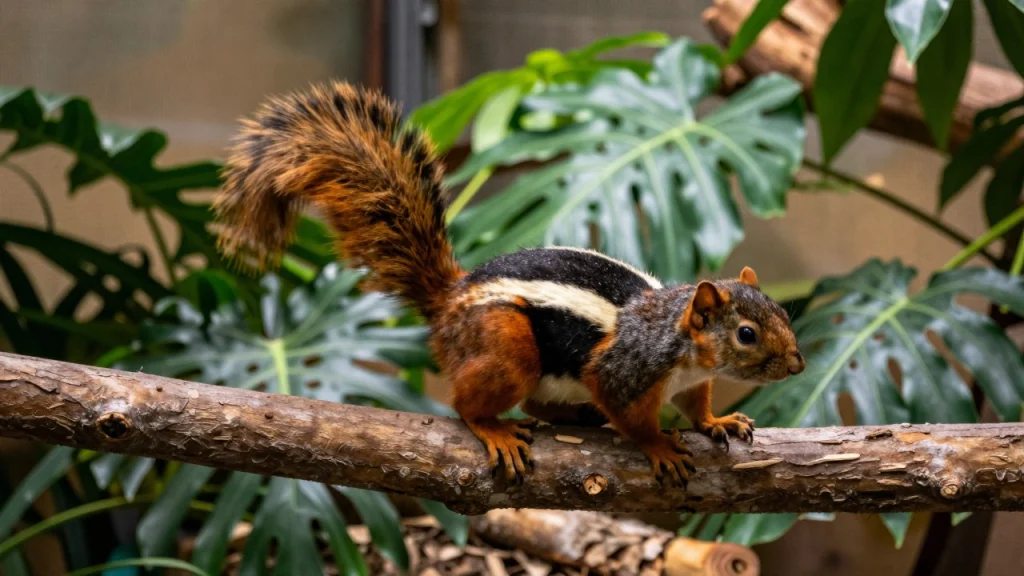
Prevost’s squirrels, a tree squirrel of Southeast Asia, live about 15 years in human care, which is longer than the maximum ever recorded for the whole family in the wild. That gap tracks neatly with the list above, read backwards: none of the owls, foxes, cars, diseases or food shortages apply inside a managed enclosure, so a life that would normally end in a first or second year simply keeps going. Captive figures show what squirrels can do once the risks are removed, and they are a poor guide to what a wild animal should expect.
Winter survival: a treetop nest or deep torpor
Tree squirrels, the ones people see most often, stay in their nests through cold or stormy weather and venture out to feed on what they stored nearby. Ground squirrels take the opposite route, and the Arctic ground squirrel shows how extreme that strategy can become.
That animal drops into bouts of torpor lasting 2 to 3 weeks, with a body temperature of about 1°C, and each bout is broken by an arousal, a burst of intense activity that lifts the animal from that torpid temperature to nearly 40°C in somewhere between 10 and 20 hours for a typical mid-winter episode. Those rewarmings are the price of the strategy, and the price is steep: arousals can consume up to 86% of the energy spent across a full cycle of torpor and arousal. Hibernation is better understood as paying for survival in small instalments, and it shapes the life history too, since hibernating squirrels develop faster, with lactation running 38 days on average, well under the 70 days typical of tree and flying squirrels.
Caching food and planting forests
Squirrels eat mostly plant material, including seeds, nuts, fruit and fungi, with insects, eggs and even a small vertebrate added by many species. Most of them store food as well, and the surplus they bury is what carries a squirrel through a bad season. It also feeds the forest, because tree and flying squirrels are essential to forest regeneration around the world, partly through seeds that pass through them and partly through their caching habits. A nut forgotten in the right spot becomes a tree. Gray squirrels play the same role with fungi, spreading the spores of the truffles they eat.
Growing up early, breeding often
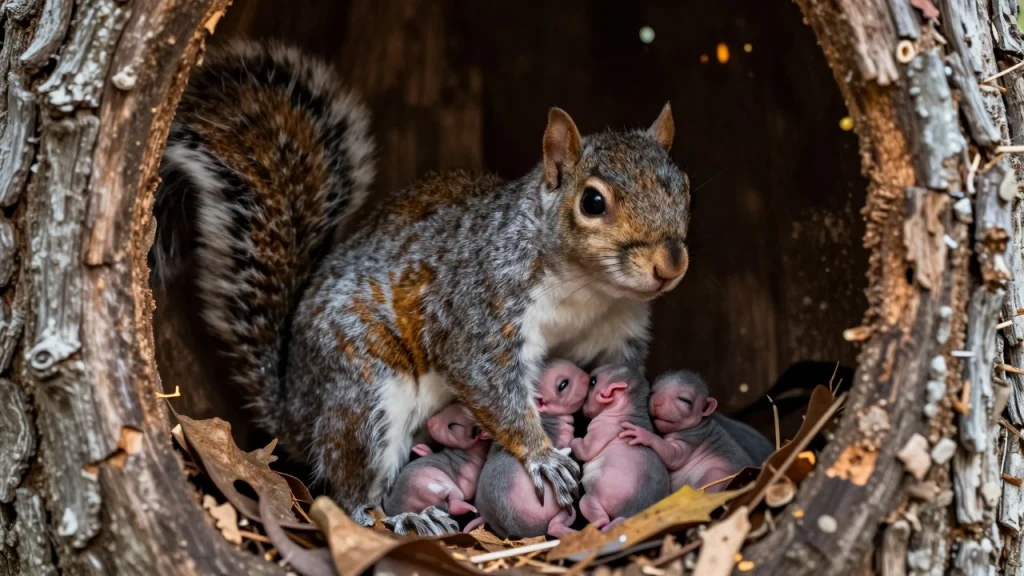
Reproduction is where the life history shows. Eastern gray squirrels carry their young for 44 days, produce two litters a year, one in late winter and one in midsummer, and generally raise 2 to 4 young each time, with up to 8 possible. Weaning starts in the seventh week, adult size is reached at 9 months, and females can breed twice a year over a span of more than 8 years. Prevost’s squirrels mature at roughly one year and can produce up to three litters a year, usually of one or two young.
The pace varies enormously across the family. Some squirrels leave the nest at just 26 days old and are sexually mature by 87 days, while others need 42 days to be fully developed and still take 3 years to mature. A short life only works as a strategy if the reproductive career starts early, which is exactly what those numbers describe.
Most species are doing well
On the whole, squirrels are in decent shape, and they are not fussy about where they live, turning up anywhere from Arctic tundra to rainforest, suburbs and cities included. Of the 279 species in the family, just two count as critically endangered, with another 15 listed as endangered and 16 as vulnerable.
The pressure falls hardest on specialists. The Vancouver marmot is the most endangered sciurid of all, and as of 2004 only about 35 individuals were counted in the wild, with habitat destruction and encroachment by people given as the causes. Tropical tree squirrels meet the same problem: the Prevost’s squirrel has lost habitat steadily as plantations expanded, and in places it is still taken for the pet trade at a high rate.
What decides how long a squirrel lives
Pulling the threads together, a squirrel lifespan comes down to a few things: which species it is, whether it gets through its first winter, whether it can stay out of reach of foxes and cars, and how much of its food cache it recovers in hard times. An animal that clears all of those reaches the top of the family range, and the squirrels holding longevity records are by definition the exceptions. For most of them, a short life in a dangerous world is the ordinary outcome rather than a sad one.
Sources
- Animal Diversity Web: Sciuridae (squirrels)
- Animal Diversity Web: Tamiasciurus hudsonicus (red squirrel)
- Animal Diversity Web: Sciurus carolinensis (eastern gray squirrel)
- Washington Department of Fish and Wildlife: Living with wildlife: Tree squirrels
- Smithsonian’s National Zoo and Conservation Biology Institute: Prevost’s squirrel
- Frontiers in Physiology: Non-shivering thermogenesis is differentially regulated during the hibernation season in Arctic ground squirrels