
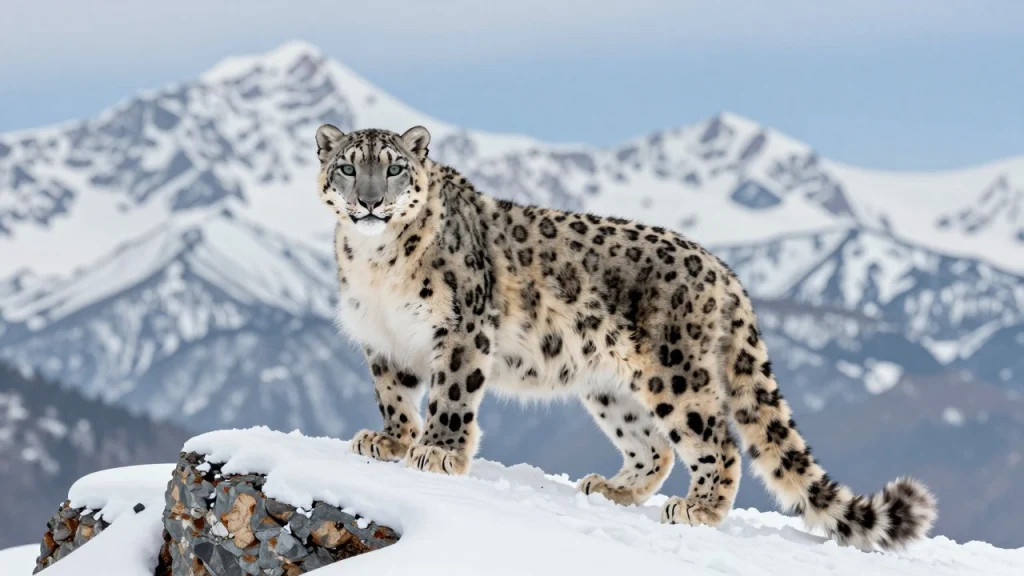
While both snow leopards (Panthera uncia) and African leopards (Panthera pardus) are magnificent big cats belonging to the family Felidae, they are distinct species adapted to vastly different environments. Snow leopards thrive in the icy, high-altitude mountain ranges of Central Asia, whereas African leopards inhabit savanna, forest, and desert ecosystems across Africa. These contrasting environments have driven key physical differences in their body size, coat characteristics, tail length, and anatomical adaptations.
Understanding how snow leopards differ physically from African leopards reveals the fascinating ways evolution shapes predators for survival in extreme habitats. From thick fur coats to wide paws designed for snow travel, every physical feature highlights their unique ecological niches.
Body Structure and Weight Differences
African leopards are generally larger and more heavily built than snow leopards. Adult male African leopards range from 90 to 200 pounds (about 41 to 91 kg), with shoulder height reported as 18 to 31 inches. Their muscular frame provides the raw strength needed to drag heavy prey up into trees.
In contrast, snow leopards are somewhat smaller and stockier, built for agility on steep cliffs rather than pure hoisting strength. Adult snow leopards usually weigh between 60 and 120 pounds (about 27 to 54 kg). Their shorter limbs and lower center of gravity afford them superior stability when navigating precarious alpine terrain.
Coat Density, Coloration, and Spot Patterns
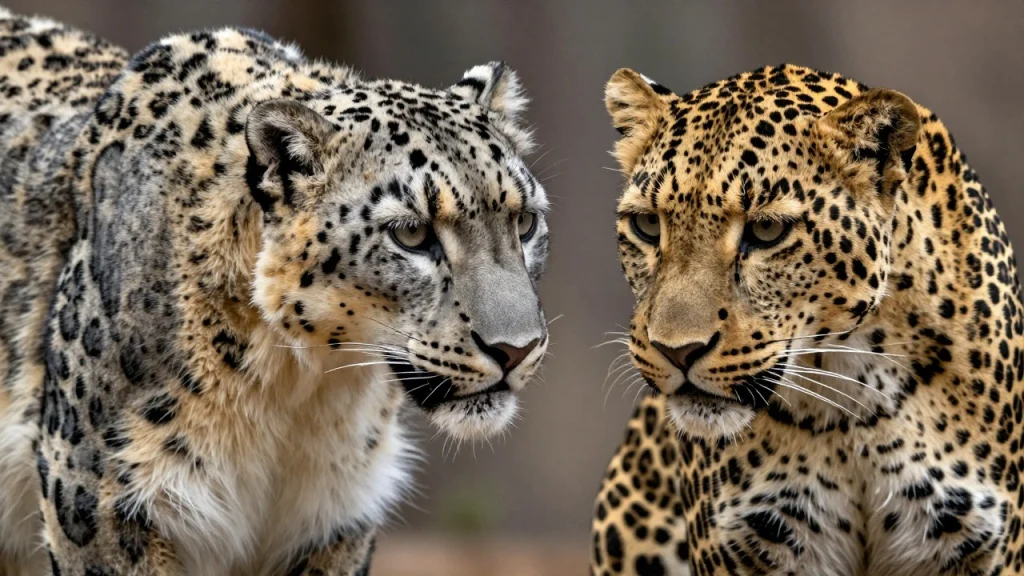
The most visual distinction between the two cats lies in their fur. Snow leopards possess an exceptionally dense coat to endure subzero mountain temperatures. Their belly fur can reach up to 5 inches in length. The base coat color ranges from smoky gray to yellowish-tan with a white underbelly, providing seamless camouflage against rocky, snow-draped landscapes.
African leopards have a much shorter, sleek coat designed to regulate body temperature in warmer climates. Their base coloration ranges from pale gold to rich tawny yellow.
Both species feature rosette patterns, but their shapes and arrangements differ significantly:
- Snow leopards: Feature large, widely spaced, dark gray or black rings surrounding open centers, interspersed with solid spots on their head and limbs.
- African leopards: Feature black, flower-shaped rosettes, typically darker and more defined against their golden coats.
Tail Length and Function
Tail morphology is another major physical difference between these two big cats:
- Snow leopard tails: Exceptionally thick and long, often measuring 36 to 40 inches, nearly equal to their entire body length. This massive, fur-covered tail serves as a balance pole during leaps across mountain chasms and can be wrapped around the face for warmth while sleeping.
- African leopard tails: Measure 25 to 39 inches. Their tails aid in balance while climbing trees and running, but lack the extreme density and length of the snow leopard’s tail.
Paw Size and Limb Adaptations
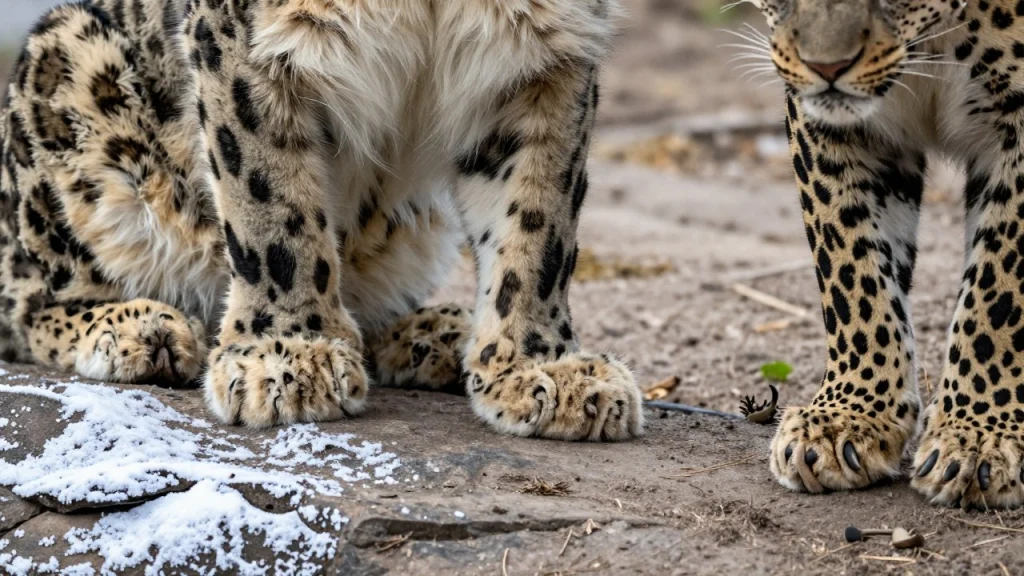
The paws of snow leopards are uniquely adapted for treacherous winter environments. They feature exceptionally large, wide paws that act like natural snowshoes, distributing body weight evenly across soft snow and preventing the animal from sinking. The undersides of their paws are covered in thick fur, which improves traction on icy surfaces and protects their pads from freezing ground.
African leopards have muscular paws equipped with sharp, retractable claws. Their paws are engineered for gripping tree bark, sprinting across dry earth, and tackling prey on solid ground.
Facial Features and Skull Structure
Examining the head structure of both cats reveals specialized adaptations for breathing and temperature control:
- Snow leopards: Possess a short, broad skull with a enlarged nasal cavity. This structural adaptation warms cold, thin alpine air before it reaches their lungs. Their eyes are greenish-gray or pale yellow.
- African leopards: Have a massive skull that gives room for powerful jaw muscles. Their eyes are typically bright golden-yellow to amber.
Additionally, while African leopards can produce deep, resonant roars due to specialized vocal chord anatomy, snow leopards cannot roar. Their vocal structures produce purrs, chuffs, growls, and mews instead.
Summary of Physical Differences
Comparing these physical traits highlights how specialization equips each cat for its environment:
- Body mass: African leopards are larger and heavier; snow leopards are lighter with a stockier build.
- Fur type: Snow leopards have thick, smoky-gray fur; African leopards have short, golden tawny fur.
- Tail length: Snow leopards have extra-long, plush tails; African leopards have shorter, sleeker tails.
- Paws: Snow leopards feature broad, furry paws for snow travel; African leopards have muscular paws for climbing and running.
Through these distinct physical attributes, snow leopards and African leopards demonstrate how closely physical structure is tied to habitat survival.