
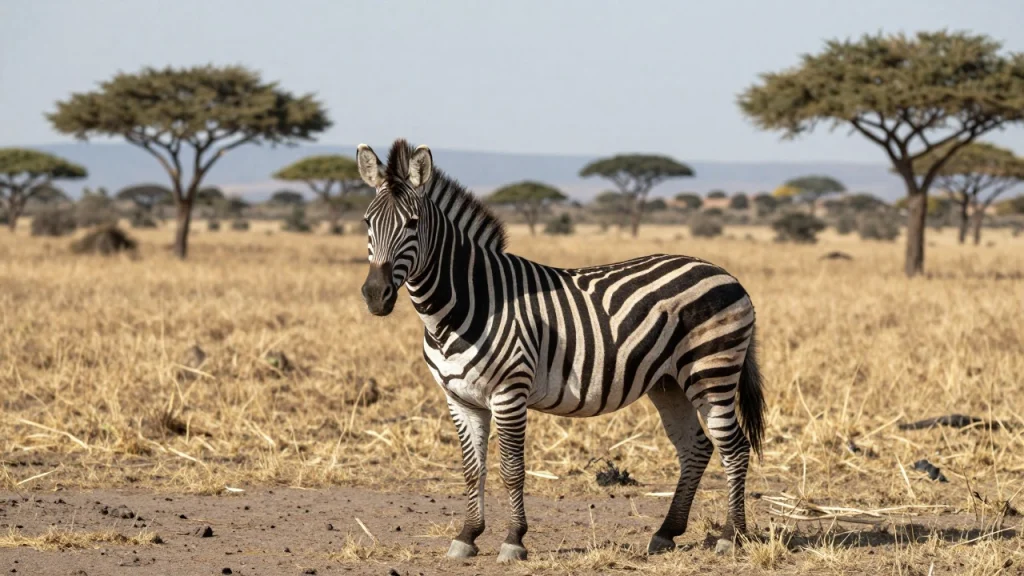
Zebras sleep standing up thanks to a specialized anatomical mechanism known as the stay apparatus. This system of muscles, tendons, and ligaments allows them to lock their limb joints in place. By locking their legs, zebras can support their full body weight while relaxing their muscles, allowing them to rest upright without falling over or expending excessive energy.
As prey animals inhabiting grasslands, savannas, and even rocky arid slopes, sleeping while standing is a vital survival adaptation for zebras. Zebras face predators such as lions and hyenas, and when resting at night, some herd members lie down while one stands watch. By remaining on their feet during light sleep, zebras are ready to sprint away instantly if danger approaches.
The Science Behind the Stay Apparatus
The stay apparatus is a remarkable structural feature shared by zebras, horses, and other ungulates. It functions through a combination of reciprocal mechanisms in both the forelimbs and hindlimbs. In horses, the passive stay apparatus blocks flexion of the knee and tarsus joints.
In the hind legs, the process relies heavily on the patellar locking mechanism. The patellar locking mechanism locks the stifle joint, which automatically stabilizes the lower joints of the leg through connected tendons.
In horses, resting with the weight mainly on three legs made up about 62% of observed rest time, as the passive stay apparatus prevents muscle fatigue.
Do Zebras Ever Lie Down to Sleep?
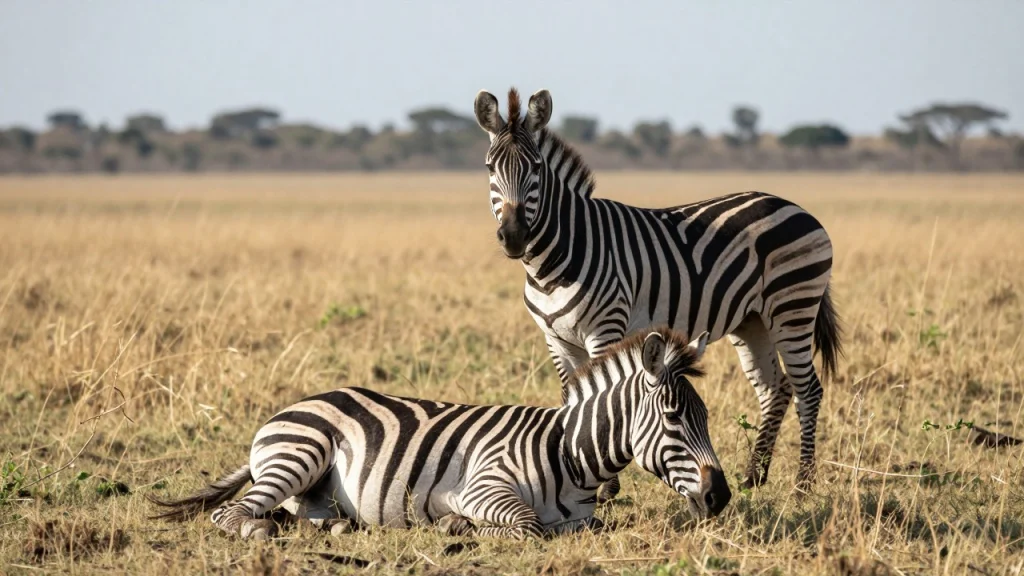
Equids can sleep standing, but horses require recumbency for REM sleep, and all sleep stages are necessary for physiological and psychological recovery. During REM sleep, all skeletal muscles fully relax, making it impossible for the stay apparatus to hold the animal upright.
For horses, REM sleep requires recumbency, either sternal with the muzzle on the ground or lateral. Because these positions render them completely vulnerable, zebras only lie down under specific, safe conditions:
- Group protection: Plains and mountain zebras live in family groups; when resting at night, zebras may lie down while one stands watch, but Grevy’s zebras do not have a herd system.
- Short durations: In horses, a minimum of about 30 minutes of recumbency per 24 hours is needed for minimal REM sleep.
- Optimal environment: Deep sleep usually happens during the warmest parts of the day when predators are less active, or in wide open areas offering clear visibility.
Why Standing Rest Is Essential for Savanna Survival
The physical design of a zebra makes standing sleep an evolutionary necessity. Zebras weigh 480 to 990 pounds (218 to 450 kilograms). Transitioning from lying flat on the ground to a full sprint requires significant muscular effort and precious seconds, time a zebra rarely has when ambushed by a predator.
Equids can remain standing while ready to flee. The stay apparatus essentially turns the animal’s legs into rigid pillars, minimizing metabolic output while maximizing readiness.
How Zebra Sleep Compares to Other Large Mammals
Zebras are not unique in using a stay apparatus. Other large herbivores on the savanna have developed similar or complementary sleeping strategies to balance rest with survival:
- Horses and donkeys: As close relatives in the equid family, horses and donkeys possess the exact same stay apparatus structure and sleep patterns as zebras.
- Giraffes: They need only 5 to 30 minutes of sleep in a 24-hour period, often in naps lasting one or two minutes, and can rest while standing.
By blending light standing rest via the stay apparatus with guarded periods of deep lying sleep, zebras have perfected a survival strategy that keeps them rested and ready to flee in the wild.
Sources
- Animal Diversity Web, University of Michigan: Equus (asses, horses, and zebras)
- San Diego Zoo Wildlife Alliance: Zebra | San Diego Zoo Animals & Plants
- Frontiers in Veterinary Science: Space Allowance of the Littered Area Affects Lying Behavior in Group-Housed Horses
- Veterinary Research Communications via PubMed: Electromyographic and behavioral analysis of horses submitted to medial patellar desmotomy
- San Diego Zoo Wildlife Alliance: Giraffe | San Diego Zoo Animals & Plants