
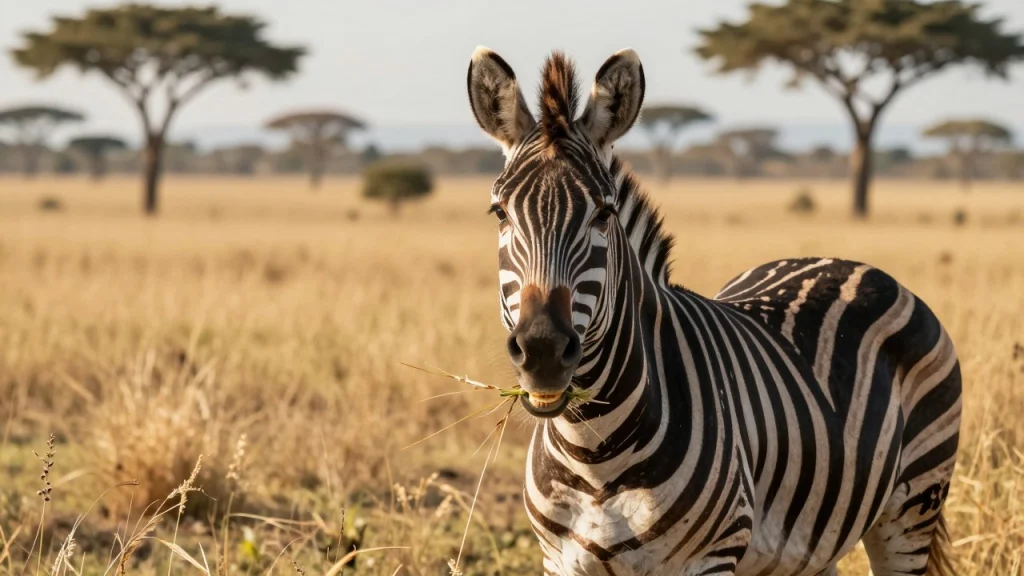
An adult zebra typically has between 36 and 44 teeth, depending on its sex and whether wolf teeth are present. Like other members of the equine family (Equidae), adult males usually possess more teeth than females due to the presence of specialized canine teeth used primarily for fighting and defending territory.
Understanding how many teeth an adult zebra has provides fascinating insight into their evolutionary adaptation as herbivorous grazers on the African savannah. Their specialized dentition allows them to consume harsh, fibrous vegetation that many other herbivores cannot digest efficiently.
Breakdown of a Zebra’s Dental Structure
A zebra’s mouth is specially adapted for cropping and grinding tough African grasses. Their teeth continue to erupt throughout their life to offset the extreme wear and tear caused by silica-rich vegetation and ingested dirt.
The dental count varies primarily between male and female adult zebras:
- Incisors (12 total): Located at the front of the jaw (six on the upper arch and six on the lower arch), these sharp teeth are used to bite off plant stems near the ground.
- Canines (0 to 4 total): Adult male zebras almost always develop four canine teeth (two upper, two lower), often referred to as “tushes.” Female zebras rarely grow canines, or if they do, they remain small and underdeveloped.
- Premolars and Molars (24 total): Situated in the back of the mouth, zebras have six cheek teeth on each side of the upper and lower jaws (12 premolars and 12 molars). These high-crowned teeth grind tough grasses into fine particles before swallowing.
- Wolf Teeth (0 to 4 vestigial teeth): Equids may develop up to four vestigial first premolars, or wolf teeth, on the upper jaw, lower jaw, or both.
Male vs. Female Zebra Dentition
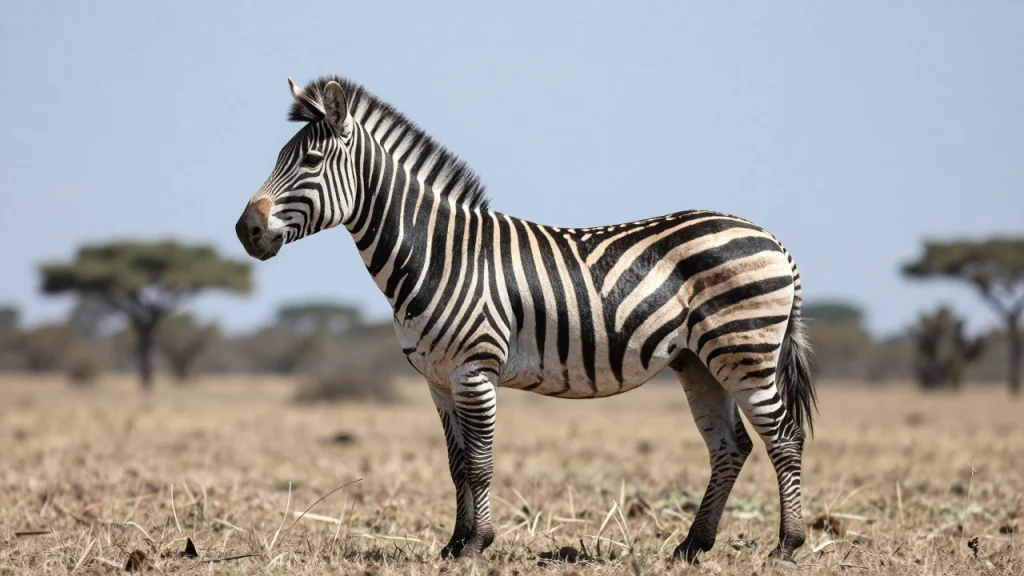
The primary reason for the variation in zebra tooth count is sexual dimorphism in canine development.
Male zebras use their sharp canine teeth as weapons during territorial battles or when defending their harems against rival stallions. Because female zebras do not engage in these intense dominance fights, they evolutionary diverted energy away from growing large canine teeth. Consequently, an adult male zebra usually has 40 to 44 teeth, whereas an adult female zebra typically has 36 to 40 teeth.
How Zebras Use Their Teeth to Survive
Zebras are non-ruminant hindgut fermenters, meaning they must process vast quantities of coarse grass quickly. Their teeth serve two vital functions in their daily survival:
- Cropping: The upper and lower incisors meet precisely, creating a scissor-like shearing action that clips hard, fibrous grass stems close to the soil.
- Grinding: The large premolars and molars feature complex ridges of hard enamel and softer dentin. As the zebra moves its jaw laterally, these ridges act as a millstone, breaking down tough plant cell walls.
A gap called the diastema separates the front incisors from the back cheek teeth. This space allows the zebra to maneuver food with its tongue while chewing and helps separate edible plant material from unwanted debris.
Dental Growth and Aging in Zebras
Zebra teeth are hypsodont, meaning they have high crowns and continuously erupt from the gums over the animal’s lifetime. This constant eruption compensates for the continuous wear caused by gritty grasses and fine dust.
Wildlife biologists can estimate a wild zebra’s age by examining the eruption pattern, wear marks, and shape of its incisors. As a zebra reaches old age, its teeth eventually wear down to the root stage. In the wild, extreme tooth wear eventually impairs a zebra’s ability to grind food effectively, which can impact its overall health and lifespan in its natural habitat.
Sources
- Smithsonian’s National Zoo: Grevy’s zebra
- San Diego Zoo Wildlife Alliance: Zebra
- Animal Diversity Web, University of Michigan: Equus grevyi (Grevy’s zebra)
- Proceedings of the National Academy of Sciences: Origins of equine dentistry
- Animals (Basel): Malocclusions and Dental Diseases in Privately Owned Horses in the Mazovia Region of Poland