
Natural Lifespan and Maximum Longevity of Axolotls
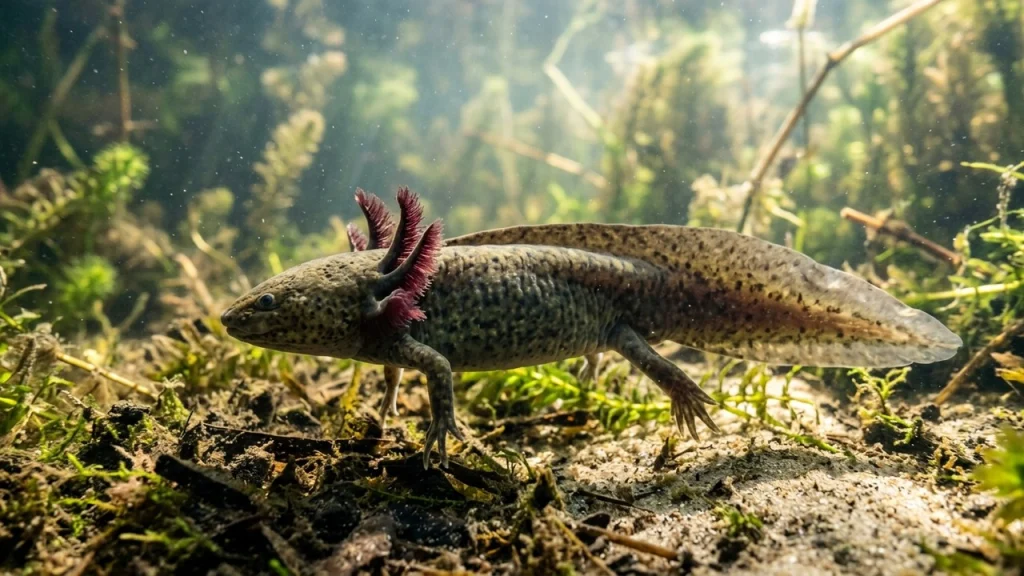
The remarkable Mexican axolotl captivates biologists and animal enthusiasts alike with its aquatic lifestyle and enduring physical youth. When evaluating how long these amphibians survive, environmental conditions create significant differences between wild ecosystems and controlled settings. In their native freshwater habitat, axolotls typically attain an average life span of 10 to 15 years. This duration reflects a balanced life history shaped by natural feeding cycles, seasonal water temperatures, and ecological interactions. Within research facilities, salamanders maintained under typical laboratory care generally achieve a longevity of 5 to 6 years, although robust specimens can survive for 10 to 15 years.
Environmental stability and protection from infectious pathogens allow domestic and research specimens to achieve exceptional ages under specialized husbandry. When housed under specialized captive care, the recorded maximum life expectancy for an axolotl reaches up to 25 years. This outstanding longevity ranks the species among the hardiest salamanders maintained by herpetologists. A critical factor in this prolonged life span is their preservation of an aquatic larval morphology. If an individual undergoes artificial metamorphosis into a land-adapted form, its life span drops dramatically, and the transformed creature typically survives for only a year or two following the shift. Indeed, a vast majority of research salamanders perish within a brief period following complete metamorphic transformation.
The Biology of Neoteny and Lifelong Juvenile Anatomy
The key biological mechanism underpinning the unusual survival and longevity of the axolotl is neoteny. Departing from standard amphibian life histories, axolotls belong to a select group of neotenic organisms that preserve their juvenile body architecture throughout adulthood. Most amphibians hatch as aquatic larvae, undergo a rapid structural remodeling, and emerge onto land as air-breathing terrestrial adults. Close relatives such as the tiger salamander ( Ambystoma tigrinum ) undergo complete metamorphosis upon reaching maturity, losing their fringed external gills and caudal swimming fin.
The axolotl diverges from this ancestral path through an endocrine modification that halts complete metamorphosis. Axolotls remain in this permanent larval state because they lack thyroid-stimulating hormone, the essential biochemical trigger needed to stimulate the release of thyroxine. Without this hormonal cascade, the physical metamorphosis into a land-dwelling salamander remains dormant. Instead, the animal continues to flourish underwater while achieving sexual maturity.
These lifelong juvenile structures feature feathery gills that branch outward like a vibrant mane, webbed feet, a dorsal fin running along the spine, and an aquatic tail. These prominent external gills maximize oxygen intake from calm lake currents, eliminating the need to adopt a terrestrial lifestyle. Fully grown adults normally reach 20–35 cm in length from snout to tail while maintaining a strictly underwater life. In terms of overall body mass, adults weigh from 2 to 8 ounces, which corresponds to 56 to 226 grams.
How Aging Alters the Axolotl Body
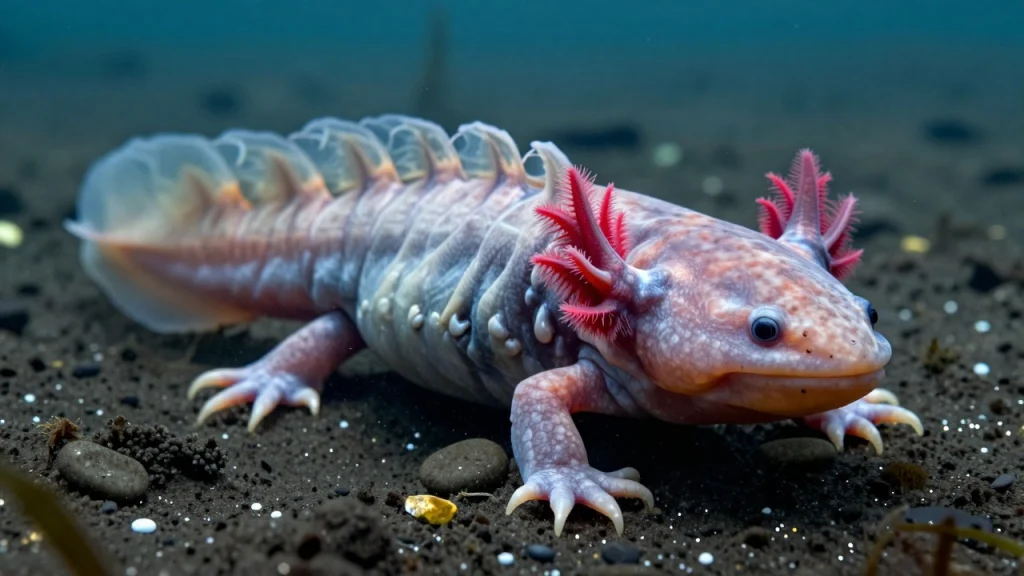
Although axolotls bypass typical metamorphic maturation, their bodies undergo defined morphological shifts as the years advance. Unlike vertebrates that halt their physical development at maturity, the axolotl continues to enlarge in size across its entire life span as an indefinitely growing creature. This sustained somatic growth means that older adults frequently achieve greater length and bulk than recently matured young adults.
Internal skeletal transformations accompany this outward expansion. While early developmental stages possess a skeletal frame constructed predominantly of cartilage, this flexible structure gradually transforms into true bone as the animal advances in age. This process of ossification alters physical durability and resilience over time:
- Larval frames rely almost entirely on soft cartilaginous elements.
- Adult skeletons undergo progressive mineral deposition and bone hardening.
This internal composition makes them vulnerable, as their physical structures are predominantly composed of soft cartilage. Their delicate cutaneous barrier remains highly permeable, enabling contaminants such as manufactured soaps or bodily skin oils to cause severe damage. Energetic behavior shifts over time as well, with young larvae demonstrating higher rates of swimming locomotion and predatory feeding than mature adults, pointing to an age-associated decline in resting metabolism. Older adults spend extended periods resting stationary in the substrate, conserving energy between opportunistic feedings.
Reproductive Maturity and Mating Cycles
The reproductive timeline of the axolotl aligns closely with its multi-year life span. Individuals reach sexual maturity approximately 1 year following egg fertilization, with males becoming biologically mature at 9 months and females at 12 months. This staggered maturation ensures that young adults enter the breeding population with adequate somatic reserves to support egg and sperm production.
Reproductive longevity reveals notable distinctions between the sexes:
- Female reproductive window: Laboratory observations demonstrate that female axolotls achieve their highest breeding success during the first few years of adulthood, whereas males sustain viable fertility into older age.
- Courtship mechanics: Courtship concludes when the male deposits gelatinous packets of sperm, known as spermatophores, onto the aquatic substrate for the female to collect using her cloaca.
- Egg deposition strategies: The female deposits her clutch egg by egg onto submerged vegetation or stone surfaces to safeguard them from passing aquatic predators.
- Embryonic progression: Following an incubation period of two weeks, the eggs hatch into free-swimming larvae.
- Larval independence: Because parent axolotls provide no parental care, newly hatched larvae must forage and navigate hazards independently.
Regenerative Capacities and the Boundaries of Repair
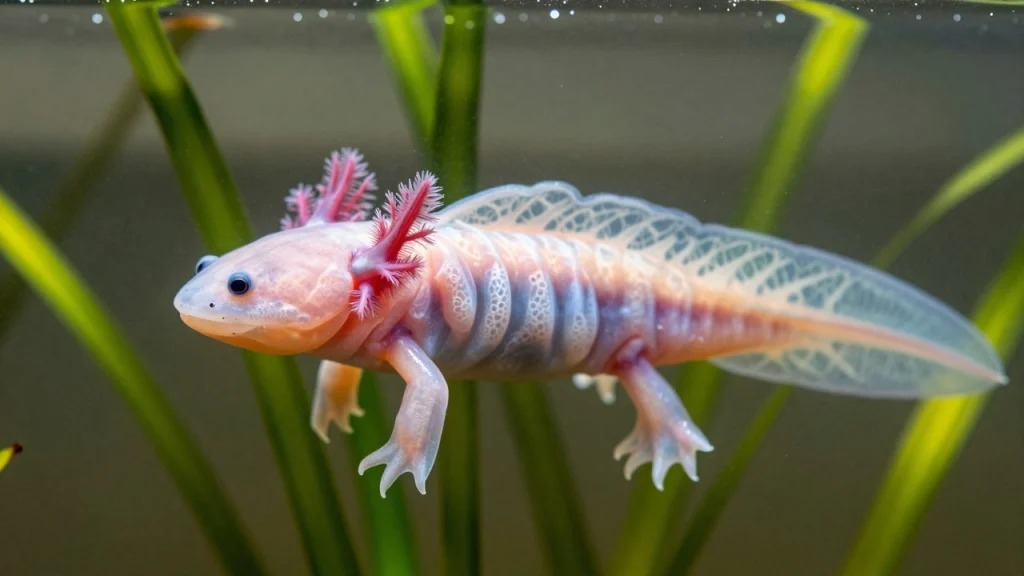
A central factor supporting the health and continuous longevity of the axolotl is its world-renowned capacity for tissue regeneration. Biologists study axolotls extensively because they can regenerate amputated limbs, damaged cardiac tissue, the spinal cord, and regions of the brain without developing permanent scar tissue. When injury occurs, specialized blastema cells accumulate at the wound margin, proliferating and differentiating into complex bone, muscle, nerve, and skin structures.
However, scientific research shows that these restorative abilities face definite biological limits. However, recent experiments revealed that regenerative capacity diminishes in nearly half of tested specimens when a complete limb is amputated multiple times along the exact same cross-sectional plane. Repeated trauma induces local fibrotic scarring, demonstrating that cellular senescence and tissue exhaustion eventually constrain regeneration.
Furthermore, attempts to alter the life cycle of the axolotl disrupt these healing systems. While scientists can administer chemical injections of iodine or thyroid hormone to trigger full transformation into adult salamanders, the biological outcomes are highly unpredictable and frequently reduce the creature’s capacity for tissue regeneration. The hormonal shock of forced transformation exacts a heavy systemic toll, leading directly to the truncated survival observed in terrestrial specimens.
Wild Habitat, Natural History, and Foraging Dynamics
Understanding the life span of the axolotl requires examining the unique aquatic world where the species evolved. Evolutionary lineages reveal that axolotls descended from tiger salamanders and represent an evolutionarily modern branch, having occupied the high-altitude wetlands of central Mexico for roughly 10,000 years. Wild populations of Ambystoma mexicanum historically occupied Lakes Chalco and Xochimilco across the high Valley of Mexico.
In these cool, high-elevation waters, axolotls established distinct ecological behaviors:
- Activity rhythms: Axolotls generally live as solitary creatures that remain capable of active movement during both night and daylight hours.
- Predator avoidance: In natural bodies of water, they avoid visual predators throughout the day by sheltering among thick water plants or burrowing into soft bottom silt.
- Dietary dominance: Functioning as apex carnivores within their lacustrine ecosystems, axolotls consume virtually any live prey they can seize, including small fishes, molluscs, various arthropods, and smaller conspecifics.
By hunting aquatic invertebrates and small vertebrates, the axolotl historically maintained community balance across the complex waterways of central Mexico.
Critical Threats and Conservation Survival in the Basin of Mexico
Despite their resilience in captivity, wild axolotls face severe survival pressures that threaten to erase them from their native home. The historic Xochimilco-Chalco basin formerly covered an area of 77 square miles, equivalent to 200 square kilometers, of wetlands and shallow lakes before extensive drainage programs shrank the ecosystem 85 years ago. Urban engineering drained ancient marshes to control municipal flooding and permit urban expansion, leaving only fragmented canals behind.
Today, these remaining waterways suffer intense anthropological strain. As urban communities spread, expanding human populations create heavy competition for limited freshwater resources while urban runoff and contaminants accelerate the amphibian’s decline.
Because of these cumulative pressures, widespread loss and ongoing degradation across their native lake system have pushed axolotls into a critically endangered status. Wildlife conservation surveys indicate that the wild population trend remains steadily decreasing as wetland pressures intensify. Protecting surviving canals and expanding captive breeding colonies remain paramount priorities to preserve this enduring symbol of biological wonder.
Sources
- Animal Diversity Web: Ambystoma mexicanum (Axolotl)
- San Diego Zoo Wildlife Alliance: Axolotl | San Diego Zoo Animals & Plants
- National Geographic: Axolotl, facts and photos
- Gerontology: Advancements to the axolotl model for regeneration and aging
- Developmental Dynamics: The amazing and anomalous axolotls as scientific models