What do axolotls eat in lakes and in human care
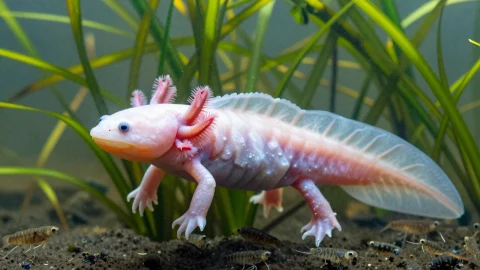
Discover what wild and captive axolotls eat, how suction feeding works, how their diet changes with age, and how habitat impacts their survival.

Curiosities, questions and fascinating facts
 Animals Editorial Team
Discover what wild and captive axolotls eat, how suction feeding works, how their diet changes with age, and how habitat impacts their survival.
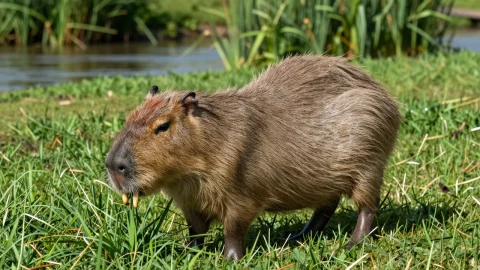
Learn what capybaras eat in the wild. Discover how these large rodents graze on grasses and aquatic plants, digest fiber, and adapt to seasonal changes.
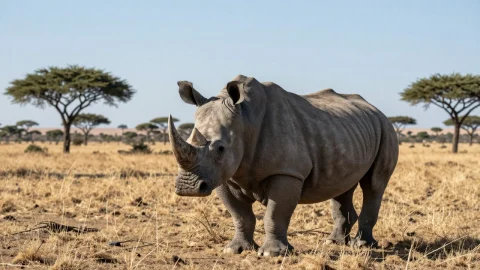
Learn how far a rhinoceros can hear, how its rotating tubular ears function, and why acute hearing compensates for its remarkably poor vision.
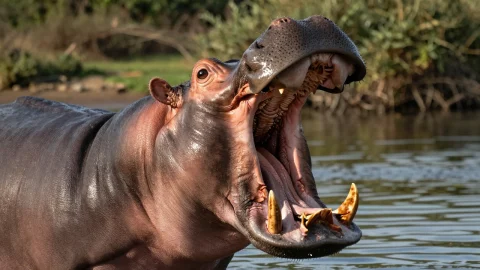
Learn about the dental structure of hippopotamuses, including their upper jaw teeth, tusks, incisors, and how they function for defense and survival.
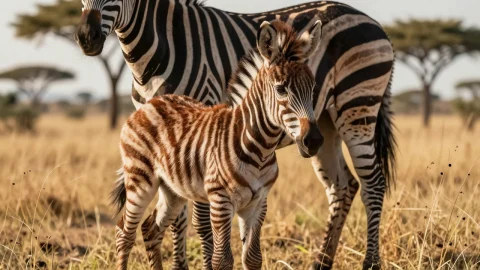
Zebra foals are born with reddish-brown stripes that gradually darken to black as they age, providing camouflage and protection from predators.

Discover key physical differences between snow leopards and African leopards, including coat density, tail length, paw structure, and body size adaptations.
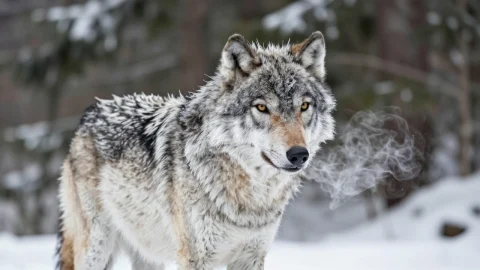
A wolf’s bite pressure is about 1,200 PSI, enough to crush the thick bones of large prey such as elk and moose to reach the nutritious marrow inside.
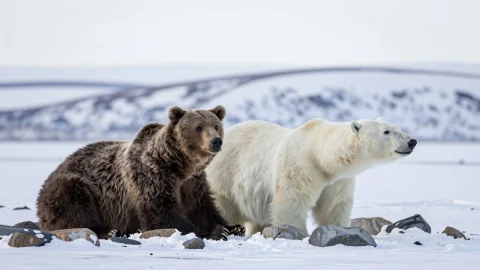
Discover how polar bear bite force of about 2,120 newtons compares to the grizzly’s 1,680 newtons, explaining skull structure and prey adaptations behind jaw strength.
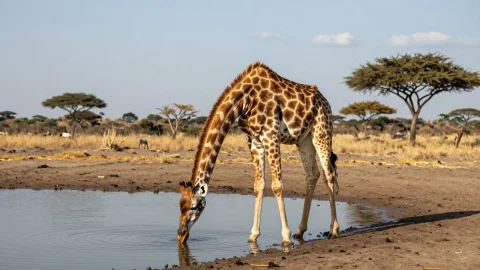
Learn how giraffes bend down to drink water safely without fainting, using specialized blood pressure valves and adaptive circulatory mechanisms.
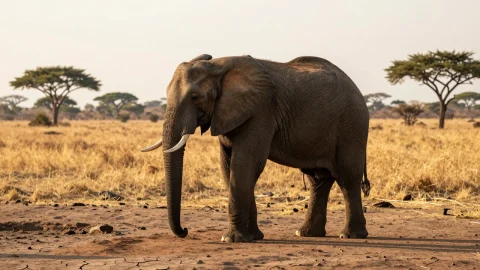
Discover how elephants use infrasound and seismic ground vibrations to communicate, track herds, and detect danger across miles of wild terrain.