What is the bite force of a lion in PSI?
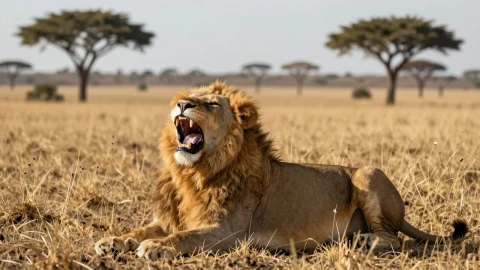
Learn about a lion’s bite force in PSI, how its jaw mechanics compare to other predators, and how dental structure and pride hunting secure prey.

Curiosities, questions and fascinating facts
 Animals Editorial Team
Learn about a lion’s bite force in PSI, how its jaw mechanics compare to other predators, and how dental structure and pride hunting secure prey.
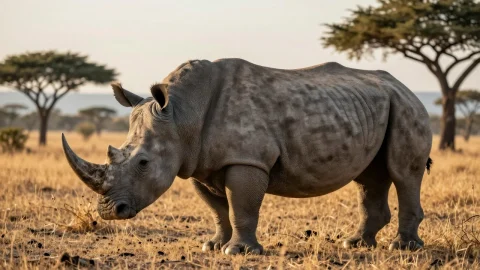
White rhinoceros skin can be as thick as 45 mm (4.5 cm), acting as armor against threats while remaining sensitive to sunburn and biting insects.
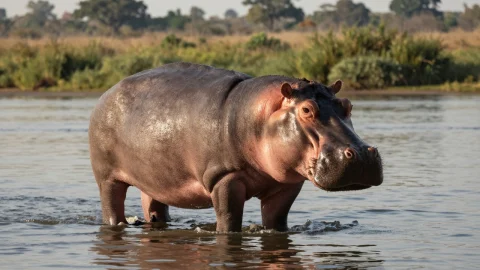
A hippopotamus gestation period lasts about 8 months. Learn about hippo pregnancy, underwater birth, and calf survival.
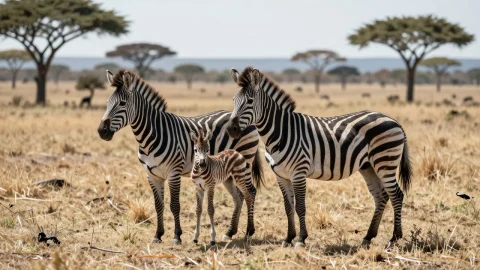
Learn about the zebra gestation period, lasting 12 to 14 months by species, and how extended pregnancies help newborn foals survive wild predators.
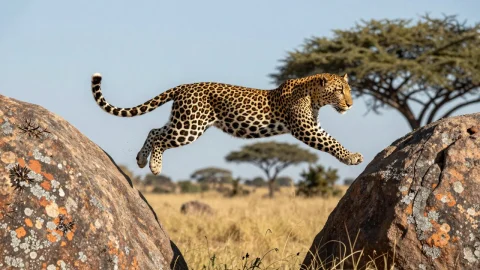
A leopard can jump horizontally up to 20 feet (6 meters) and leap vertically up to 10 feet (3 meters) using explosive, powerful hind limb muscles.

Discover how wolves use their sense of smell to find prey, and how humidity, terrain, and nasal anatomy shape this hunting sense.

Discover why bear cubs stay with their mother for one and a half to several years to learn vital foraging skills, build physical strength, and gain protection.
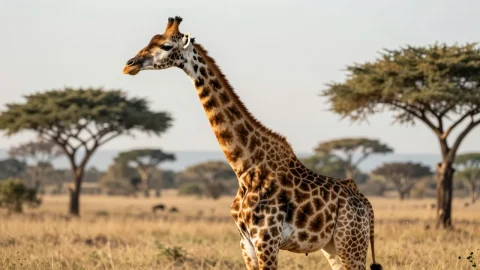
Every giraffe has a unique spot pattern that functions like a human fingerprint. Discover how these markings support survival, camouflage, and tracking.
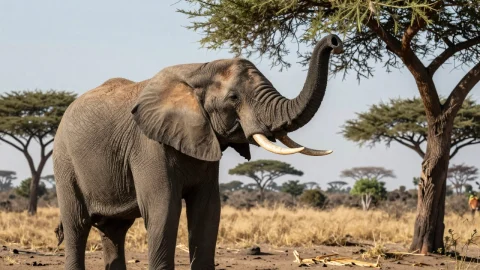
An elephant’s trunk contains about 40,000 muscles by one estimate, or roughly 90,000 muscle fascicles by a more detailed count, and zero bones, allowing incredible strength to lift 600 pounds and delicacy to pick up small objects.
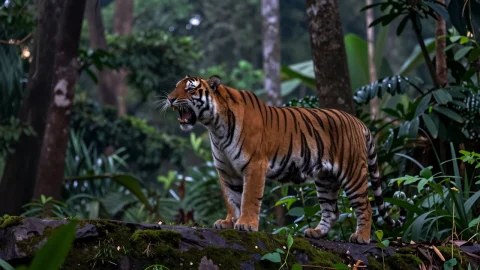
Discover how far a tiger’s roar can travel, reaching up to about 1.8 miles (3 kilometers). Learn about the vocal adaptations and acoustic power behind this long-distance roar.