Skip to content
Animal Fact File

Animal Fact File

Curiosities, questions and fascinating facts

  • Animals
    • Big cats
      • Lion
      • Tiger
      • Cheetah
      • Leopard
      • Jaguar
    • Bears, pandas and wolves
      • Bear
      • Polar bear
      • Giant panda
      • Red panda
      • Wolf
    • Safari animals
      • Elephant
      • Hippo
      • Rhinoceros
      • Giraffe
      • Zebra
      • Gorilla
    • Ocean life
      • Orca
      • Blue whale
      • Sperm whale
      • Dolphin
      • Octopus
      • Jellyfish
      • Penguin
    • Backyard animals
      • Raccoon
      • Opossum
      • Squirrel
      • Bat
      • Coyote
    • Odd and unusual
      • Axolotl
      • Shoebill
      • Komodo dragon
      • Capybara
      • Honey badger
      • Platypus
    • All animals
  • Printables & tools
    • Axolotl coloring pages
    • Capybara coloring pages
    • Random animal generator
  • Topics
    • Physical Characteristics
    • Wild Habitats
    • Diet & Hunting
    • Natural Behaviors
    • Species & Conservation
    • Reproduction & Life Cycle
  • Español

Physical Characteristics

How far can a leopard jump horizontally and vertically?
September 25, 2026September 24, 2026 by Animals Editorial Team
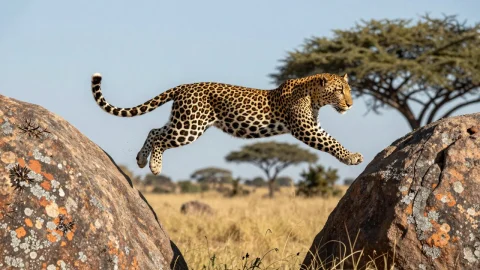
A leopard mid-air during a powerful horizontal leap across a rocky savanna ravine under bright daylight.

A leopard can jump horizontally up to 20 feet (6 meters) and leap vertically up to 10 feet (3 meters) using explosive, powerful hind limb muscles.

Categories Physical Characteristics Tags Leopard

How far can a wolf smell its prey? Sensory range explained

September 25, 2026September 24, 2026 by Animals Editorial Team
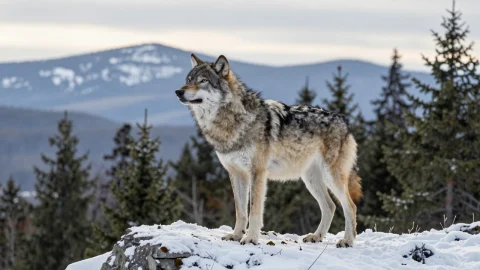
Gray wolf standing on a ridge sampling scent carrying on the wind over a snowy coniferous valley

Discover how wolves use their sense of smell to find prey, and how humidity, terrain, and nasal anatomy shape this hunting sense.
Categories Physical Characteristics Tags Wolf

Are a Giraffe’s Spots Unique to Each Individual?

September 30, 2026September 24, 2026 by Animals Editorial Team
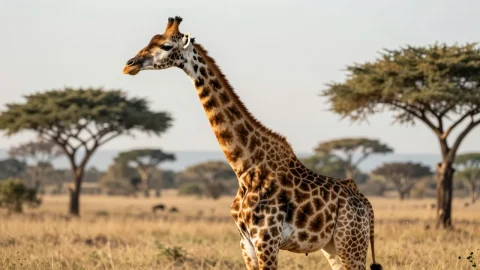
A tall giraffe stands on an open African savannah, showing its distinct brown and cream patch patterns under warm sunlight.

Every giraffe has a unique spot pattern that functions like a human fingerprint. Discover how these markings support survival, camouflage, and tracking.
Categories Physical Characteristics Tags Giraffe

How many muscles are in an elephant’s trunk?

September 25, 2026September 24, 2026 by Animals Editorial Team
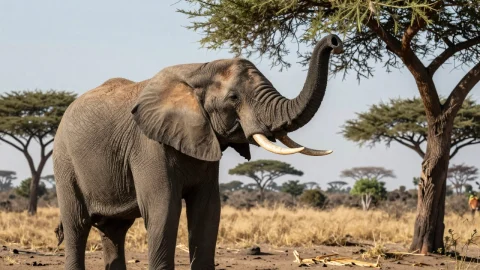
African elephant standing in a sunny savanna using its muscular trunk to strip fresh leaves from a high branch.

An elephant’s trunk contains about 40,000 muscles by one estimate, or roughly 90,000 muscle fascicles by a more detailed count, and zero bones, allowing incredible strength to lift 600 pounds and delicacy to pick up small objects.
Categories Physical Characteristics Tags Elephant

How far away can a tiger’s roar be heard?

September 25, 2026September 24, 2026 by Animals Editorial Team
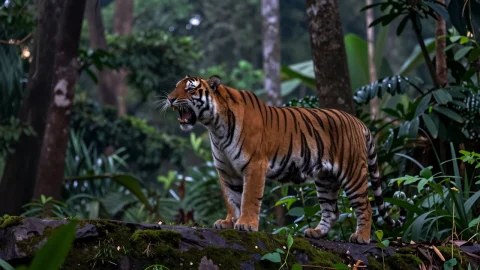
Adult Bengal tiger roaring in a lush jungle setting during twilight hours.

Discover how far a tiger’s roar can travel, reaching up to about 1.8 miles (3 kilometers). Learn about the vocal adaptations and acoustic power behind this long-distance roar.
Categories Physical Characteristics Tags Tiger

How far can a lion jump in a single bound?

September 25, 2026September 24, 2026 by Animals Editorial Team
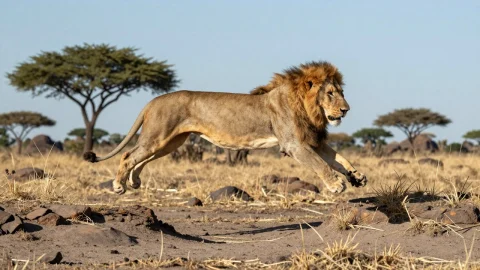
Male lion leaping horizontally across an open savanna gully under warm daylight.

Discover how far a lion can jump horizontally and vertically, exploring the physical adaptations and hunting techniques that enable these explosive bounds.
Categories Physical Characteristics Tags Lion

How heavy can a rhinoceros get? Maximum weight by species

October 5, 2026September 23, 2026 by Animals Editorial Team
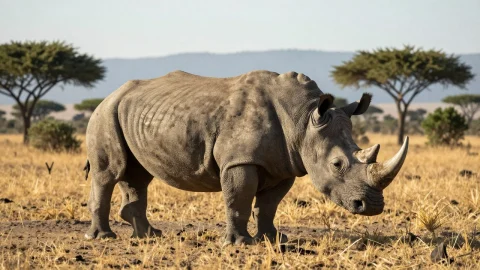
Massive white rhinoceros walking across a sunlit African savanna with dusty soil and sparse acacia trees.

Discover how heavy rhinoceroses can get by species, from black and Sumatran rhinos to the white rhino, which reaches maximum weights of 3,600 kg.
Categories Physical Characteristics Tags Rhinoceros

Why do rhinoceroses have horns? Evolutionary uses and structure

September 25, 2026September 23, 2026 by Animals Editorial Team
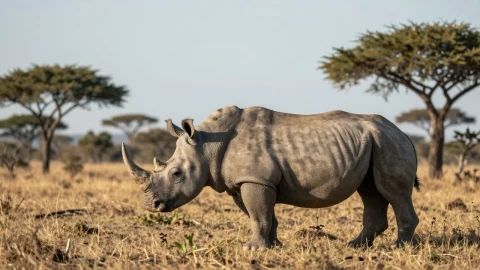
A white rhinoceros standing in savanna grassland showing its thick snout horn.

Discover why rhinoceroses have horns, their evolutionary uses for defense and foraging, and how their solid keratin structure differs from bone.
Categories Physical Characteristics Tags Rhinoceros

How heavy can a hippopotamus get? Maximum weight guide

September 30, 2026September 23, 2026 by Animals Editorial Team
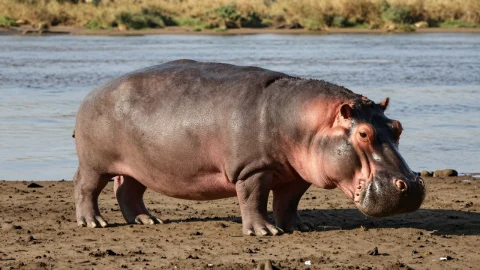
Enormous adult hippopotamus resting on a sandy African riverbank in warm afternoon sunlight.

Learn how heavy a hippopotamus can get, from average male and female weight ranges to maximum recorded weights and key factors influencing their mass.
Categories Physical Characteristics Tags Hippopotamus

Are zebras black with white stripes or white with black stripes?

September 25, 2026September 23, 2026 by Animals Editorial Team
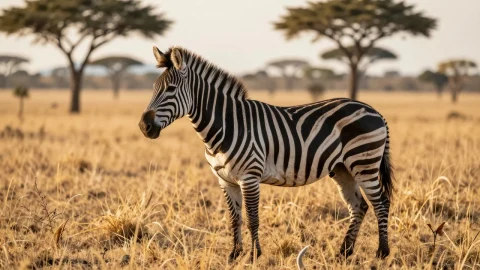
A plains zebra standing profile in high-contrast black and white stripes across golden African savanna grass.

Zebras are scientifically proven to be black with white stripes. Dark skin forms their foundation, while white stripes result from suppressed melanin production.

Categories Physical Characteristics Tags Zebra
Older posts
Newer posts
← Previous Page1 … Page10 Page11 Page12 Next →

Browse animals

Big cats
  • Lion
  • Tiger
  • Cheetah
  • Leopard
  • Jaguar
  • All big cats
Bears, pandas and wolves
  • Bear
  • Polar bear
  • Giant panda
  • Red panda
  • Wolf
  • All bears, pandas and wolves
Safari animals
  • Elephant
  • Hippo
  • Rhinoceros
  • Giraffe
  • Zebra
  • Gorilla
  • All safari animals
Ocean life
  • Orca
  • Blue whale
  • Sperm whale
  • Dolphin
  • Octopus
  • Jellyfish
  • Penguin
  • All ocean life
Backyard animals
  • Raccoon
  • Opossum
  • Squirrel
  • Bat
  • Coyote
  • All backyard animals
Odd and unusual
  • Axolotl
  • Shoebill
  • Komodo dragon
  • Capybara
  • Honey badger
  • Platypus
  • All odd and unusual

Recent articles

  • Are platypuses poisonous? Male spurs, venom and pain symptoms
  • Is a platypus a mammal? Egg laying, milk and venomous spurs
  • Do platypuses glow in the dark? UV glow, colours and camouflage
  • Do platypuses sweat milk? Mammary patches and nursing
  • Why do octopuses have three hearts? Gill and systemic flow

Animals

  • Big cats
  • Bears, pandas and wolves
  • Safari animals
  • Ocean life
  • Backyard animals
  • Odd and unusual

Printables & tools

  • Axolotl coloring pages
  • Capybara coloring pages
  • Random animal generator
© 2026 Animal Fact File ·
  • About
  • Editorial policy & AI disclosure
  • Privacy policy
  • Cookies policy
  • Contact
  • Español