
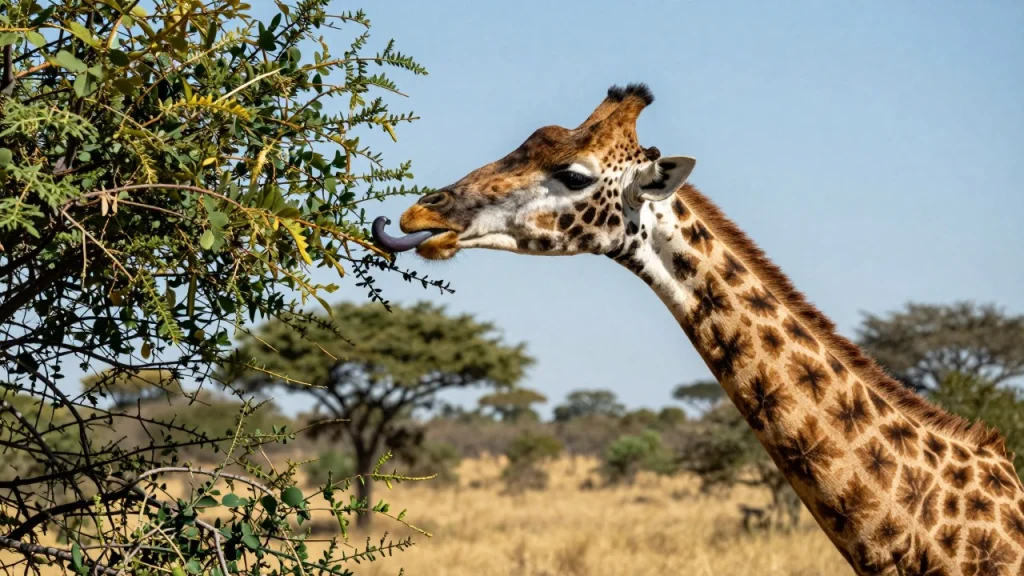
A giraffe’s tongue measures between 18 and 20 inches (45 to 50 centimeters) in length. This extraordinary organ is one of the most prominent physical adaptations in the animal kingdom, helping the world’s tallest mammal feed at heights unreachable by all other browsers except elephants.
Beyond its impressive physical dimensions, the giraffe’s tongue functions almost like a flexible hand. This extreme dexterity enables giraffes to strip nutrient-rich leaves off thorny trees while protecting themselves from punctures, intense sunlight, and dehydration in their natural wild habitats.
Physical Characteristics of the Giraffe’s Tongue
The remarkable length of a giraffe’s tongue is directly tied to the animal’s overall size and feeding strategy. Reaching up to 20 inches long, it allows giraffes to wrap around branches high above the ground and harvest foliage with incredible precision.
In addition to its size, the tongue features distinct physical traits:
- Dark Pigmentation: The front portion of the tongue is colored deep purple, blue, or black. It is thought that the dark color of a giraffe’s tongue protects it from sunburn while the giraffe browses in its African habitat.
- Prehensile Musculature: It is a prehensile muscle, meaning the giraffe can grasp, manipulate, and pull objects with it, similar to an elephant’s trunk or a primate’s hands.
- Tough, Protective Surface: The surface of the tongue is covered in thick papillae and coated with viscous, sticky saliva that neutralizes sharp thorns.
How Giraffes Use Their Tongue to Feed
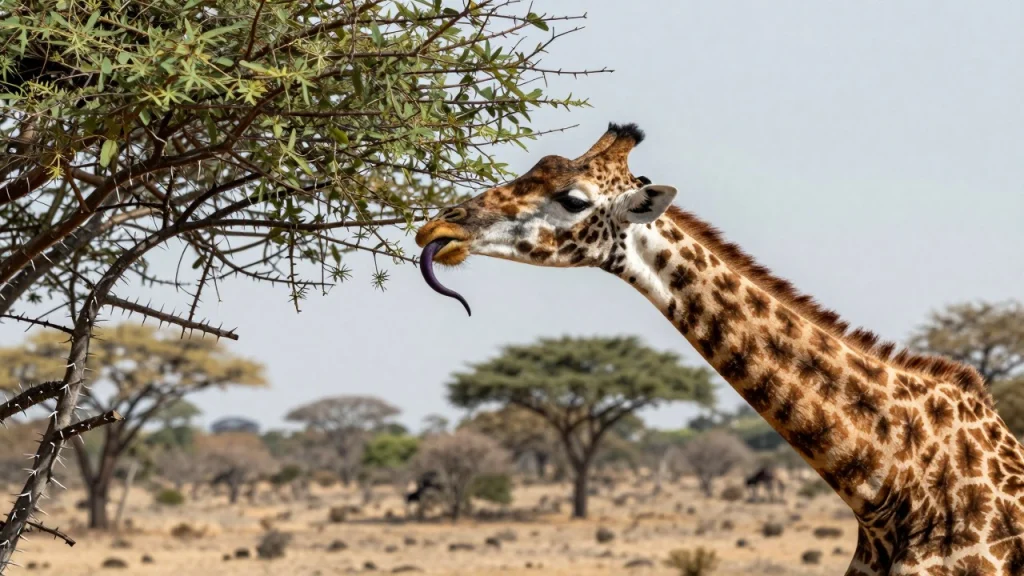
In the African savannah, acacia trees are a primary source of food for giraffes. However, acacias are armed with long thorns that keep most wildlife from eating them. The giraffe’s tongue plays a central role in navigating these defenses without causing injury to the animal.
When feeding, a giraffe extends its long tongue into dense branches, deftly curving it around small stems to strip off fresh leaves. The combination of thick tissue and dense saliva coats any thorns that happen to enter the mouth, preventing painful cuts and allowing smooth swallowing.
This specialized feeding mechanism allows giraffes to consume tens of pounds of leaves every day. By browsing higher in trees, giraffes can reduce competition for food with other browsers.
Evolutionary Advantages in the Wild
Every aspect of the giraffe’s anatomy, from its towering neck to its 18-to-20-inch tongue, represents an evolutionary response to life in open woodlands and dry savannahs. Having such an elongated tongue provides several critical advantages for survival:
- Maximum Reach: Paired with a 2.4-meter (7.9-foot) neck in adult males, the long tongue extends the giraffe’s feeding range to heights unreachable by all other browsers except elephants.
- Selective Browsing: Giraffes can pluck individual leaves rather than eating entire twigs, choosing the most nutritious plant growth available.
- Water Savings: Because acacia leaves hold high moisture content, giraffes can get most of their water from leaves in the wet season, though in the dry season they still need to drink at least every three days.
The giraffe’s tongue is a masterclass in natural engineering, combining size, strength, and specialized protection to turn thorny treetop branches into a reliable daily meal.
Sources
- San Diego Zoo Wildlife Alliance Library: Physical Characteristics – Giraffes (Giraffa spp.) Fact Sheet – LibGuides at International Environment Library Consortium
- San Diego Zoo Wildlife Alliance Library: Diet & Feeding – Giraffes (Giraffa spp.) Fact Sheet – LibGuides at International Environment Library Consortium
- San Diego Zoo Wildlife Alliance Library: Distribution & Habitat – Giraffes (Giraffa spp.) Fact Sheet – LibGuides at International Environment Library Consortium
- San Diego Zoo: Giraffe | San Diego Zoo Animals & Plants
- Animal Diversity Web, University of Michigan: Giraffa camelopardalis (giraffe) | INFORMATION | Animal Diversity Web