How fast can a Komodo dragon run? Speed and locomotion
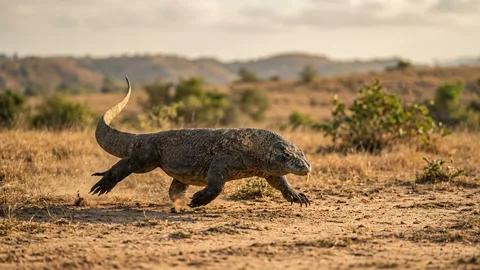
A Komodo dragon can sprint about 10 to 13 mph in short bursts, but it relies on ambush, a lifted tail for balance, and venom rather than long chases.

Curiosities, questions and fascinating facts
A Komodo dragon can sprint about 10 to 13 mph in short bursts, but it relies on ambush, a lifted tail for balance, and venom rather than long chases.
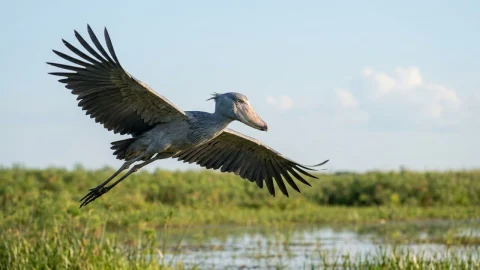
Yes, the shoebill can fly. It flaps slowly, soars on thermals with its neck pulled in, and takes 105 to 112 days after hatching to make its first flight.
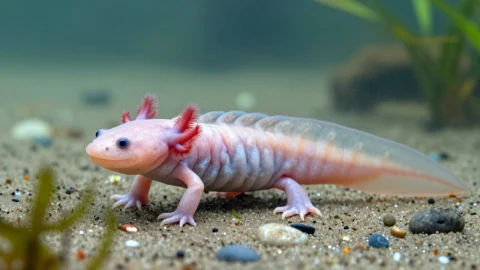
No, an axolotl cannot live out of water. Learn how neoteny, gills and delicate skin keep this salamander aquatic, and why its lakes matter for survival.
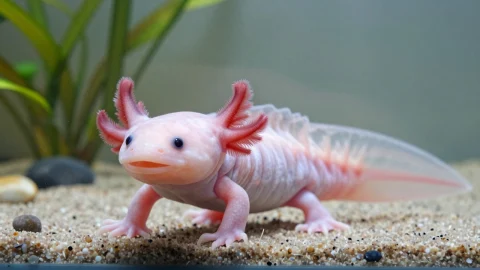
An axolotl bite is a feeding reflex from tiny gripping teeth, a harmless pinch to people. The real risk is to the fragile axolotl itself.

Yes, the wolverine is bigger than the honey badger: longer, taller and heavier at 9 to 30 kg versus 8 to 12 kg, though their weight ranges overlap.
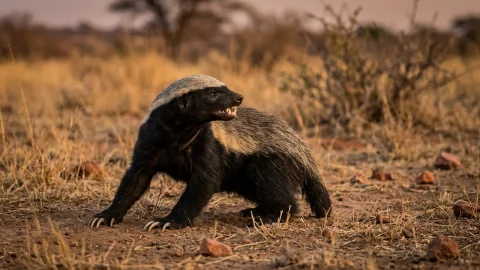
Yes, a honey badger can twist inside its thick, loose hide to face a predator holding it, then bite back. Learn how this defense works and where it fails.
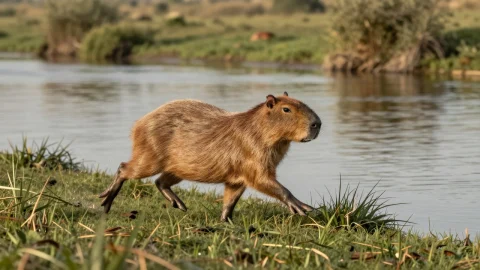
Capybaras walk by default, then gallop and half bound in short bursts of up to 200 m, mainly to reach the nearest water and hide from predators.
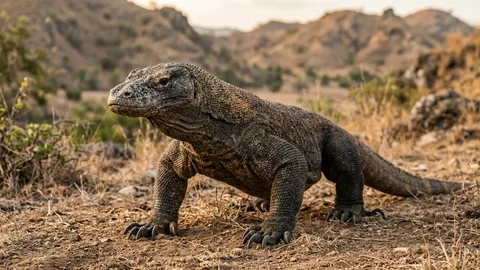
Komodo dragons are venomous: a lower-jaw gland lowers blood pressure and blocks clotting, making their bite lethal even when prey initially escapes.
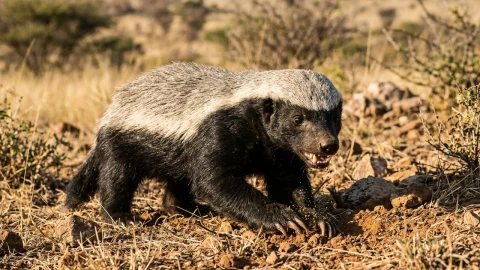
Learn about the honey badger’s bite force, skull anatomy, jaw mechanics, and how its compact physical structure enables powerful bites without reliance on PSI.
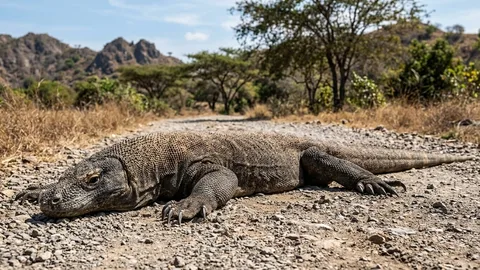
Discover how big Komodo dragons grow, including their average length of 6 to 10 feet and weight between 154 and 300 pounds for adult wild specimens.